The newly released White House National Security Strategy raises again the question whether Americans are turning isolationist. A recent poll suggests they aren’t.
Every year since 2013, the country’s top military commanders, U.S. officials, leaders from the defense industry and many of the country’s best minds on foreign policy and national security have gathered at the Ronald Reagan Presidential Library in California. There they examine our country’s defense posture and discuss our dangerous world—including, in recent years, a poll conducted by the Ronald Reagan Institute of Americans’ foreign-policy views.
The 2025 survey produced some surprising results. Sixty-four percent of Americans believe it’s better for the U.S. to be more engaged and take the lead. Only 33% think it’s better for the country to be less engaged and merely react to events.
The partisan break-out was also counterintuitive. Seventy-nine percent of self-identified MAGA Republicans and 57% of Democrats supported greater U.S. engagement.
Nor are Americans turning their backs on Europe and the North Atlantic Treaty Organization. Sixty-eight percent view NATO favorably, the highest share since the Reagan Institute began polling in 2018. Even more (76%) support U.S. military force if a NATO ally is attacked, up from 71% in June. Most Americans—59%—oppose withdrawing from NATO. Only 34% support leaving, and 1 in 5 withdrawal supporters changed their minds after being told NATO allies are increasing military spending.
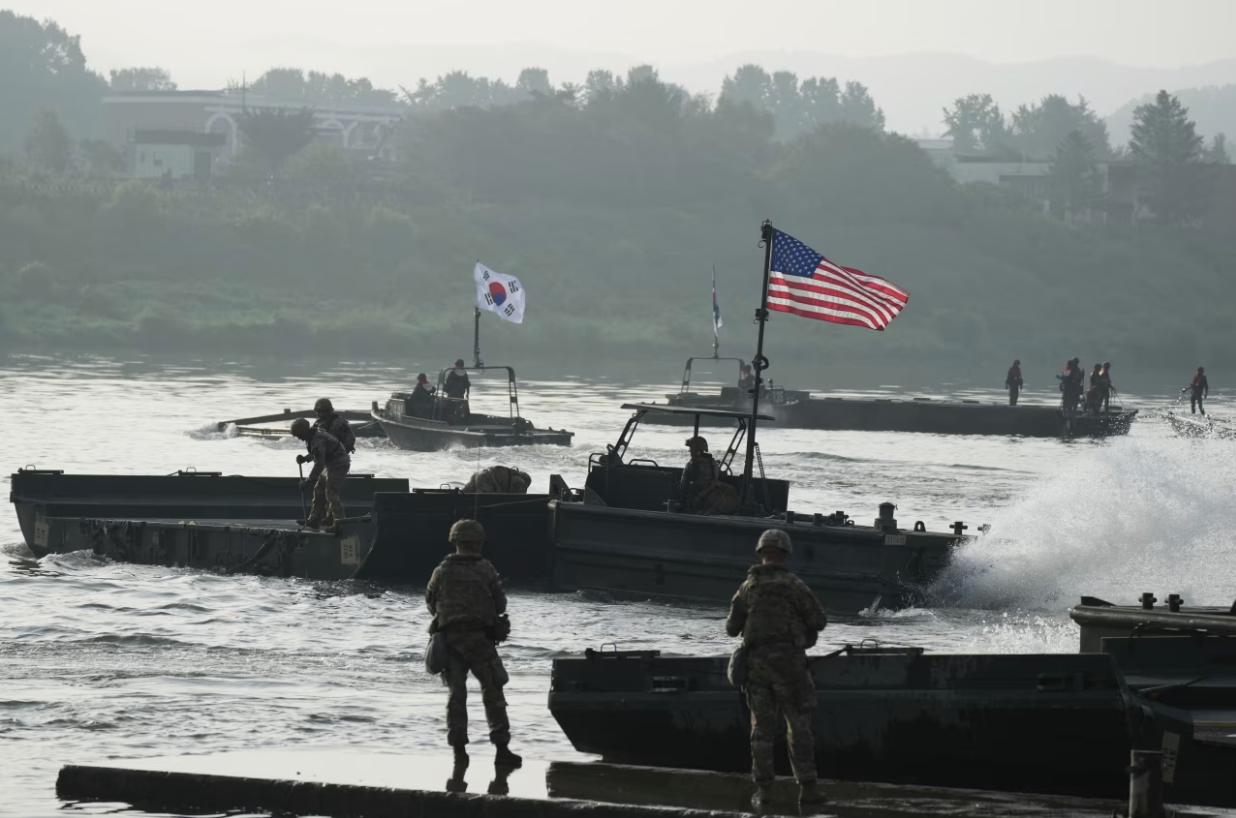
There’s also widespread agreement about the significance of America having the world’s most powerful military. Eighty-seven percent of respondents agreed that it’s important, and 71% believe the world is more likely to achieve peace when the U.S. has the strongest military globally. Sixty-four percent felt the U.S. military should be large enough to fight simultaneous wars against China and other adversaries—either Russia or a smaller enemy, such as Iran or North Korea.
Americans are clear-eyed about who our adversaries are. Nearly half say China is the greatest threat, followed by Russia at 26%. Increased cooperation between China, Russia, Iran and North Korea concerns 87% of respondents, with 50% strongly concerned.
By 62% to 11%, Americans want Ukraine to win its war against Russia—including 57% of Republicans and 72% of Democrats. Support for selling weapons to Europe to give to Ukraine is even higher, at 68%—with Republicans at 75% and Democrats at 67%. Only 28% of respondents would trust Russia to honor any peace agreement, while 70% would distrust it.
Because of concerns about China, support for Taiwan is growing. Seventy-seven percent of voters, including 81% of Republicans and 78% of Democrats, say the country is important for the U.S.