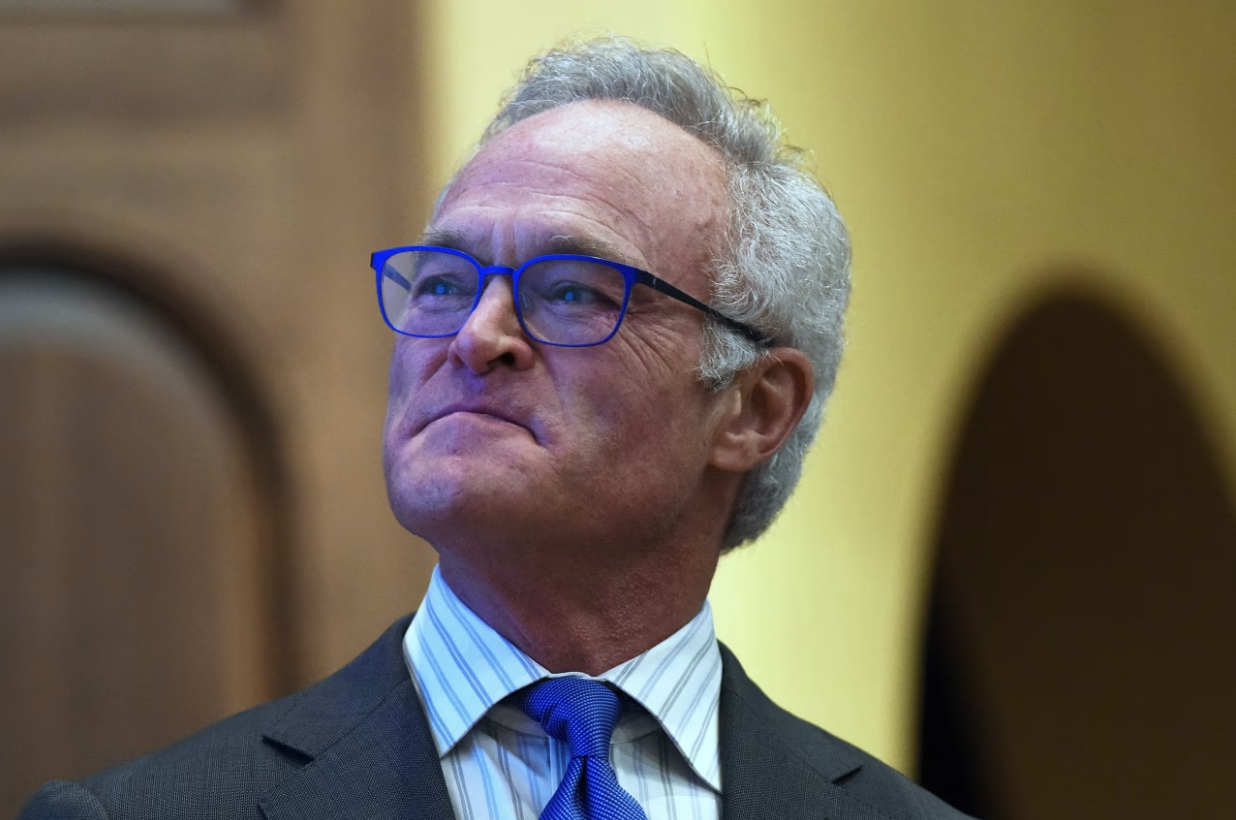
The New York Times’s Sunday interview with Scott Pelley, formerly of CBS’s “60 Minutes” is a gobsmacker.
Fired last week, Mr. Pelley mourned the end of his 37-year career at the Tiffany Network and raged at philistines who took over the show on which he worked for more than two decades.
Even now Mr. Pelley doesn’t seem to comprehend why he was fired. Let me help. At an all-hands meeting with the new executive producer of “60 Minutes,” Mr. Pelley asked Nick Bilton why he’d taken that job “knowing that you will never be welcome here.” Then Mr. Pelley accused the CBS News editor in chief, Bari Weiss, of “murdering ‘60 Minutes.’”
Summoned afterwards by CBS president Tom Cibrowski, Mr. Pelley expected he was “going to have a long conversation.” Being fired was the “furthest thing” from his mind. He was stunned when it was a short talk, followed a few hours later by an email telling him he was canned.
Did Mr. Pelley really think he could keep his job after telling the new leadership they were incompetent boobs with no right to tinker with the perfectly running machine he and his colleagues created and maintained?
Mr. Pelley, like many others in the elite media, is out of touch. Though he wasn’t present, Mr. Pelley says his colleagues were “shocked” when Ms. Weiss asked a meeting of CBS journalists, “Why does the country think you’re biased?” The answer to Ms. Weiss’s question is: Because so much of the legacy media is biased.
An October 2025 Gallup Poll found a record low 28% of Americans had a “great deal” or “fair amount” of trust in newspapers, television and radio to report the news “fully, accurately and fairly.”
Some of the decline stems from a growing distrust of all public institutions, itself an expression of our country’s severe polarization and the centrifugal forces of social media. But much of it comes from their sense that journalists—specially those from national outlets like “60 Minutes”—are insular and biased against flyover America.
Most of those journalists live in New York or Washington. As Mr. Pelley explained, “my colleagues and I have worked together 10, 20, 30 years. We travel together. We dine together. We go into literal combat together.” Given this, “these bonds are pretty tight.” When asked how he’s feeling about being fired, he said—no joke—“it’s like your spouse was murdered.”
I’ve had personal experience with how this can lead to bias in someone like Scott Pelley—namely, Scott Pelley.
In February 2008, he interviewed Jill Simpson, a small-town Alabama lawyer, on “60 Minutes.” She claimed that in 2001, when I was a White House aide,I asked her to gather evidence against the state’s then governor, Don Siegelman. As Mr. Pelley put it in interviewing Ms. Simpson: “Karl Rove asked you to take pictures of Siegelman in a compromising sexual position with one of his aides.”
This was sheer nonsense. I’d never met Ms. Simpson and never asked her or anyone else to snoop into the governor’s activities. As far as I know, Mr. Siegelman has never been credibly accused of adultery.
But there was Mr. Pelley, on camera, expressing amazement at this alleged dastardly deed. What evidence did Mr. Pelley collect to confirm Ms. Simpson’s account? Corroboration by others? Receipts from travel to Washington? Evidence she was compensated for the months she claimed she spent trailing Mr. Siegelman?
I doubt it, as no such evidence existed. If Mr. Pelley had undertaken due diligence and ideology or partisanship hadn’t entered into his decision-making, he would have concluded her story was suspect.
But the Jill Simpson tale was just too juicy. If the details were identical except that it involved a Democratic rather than a Republican president, I can’t imagine Mr. Pelley pursuing it. If he’s honest with himself, I think he’d agree.