Now that the Virginia Supreme Court has thrown out state Democrats’ attempted gerrymander, the battlefield for the House this fall is coming into focus.
In late April, the Cook Political Report estimated there were 192 safe Democratic seats and 183 safe Republican ones. That left 60 potentially competitive seats, 44 of which were either likely going to or leaning toward one party and 16 toss-ups. After the Virginia decision, the Cook Report estimates there are 184 safe Democratic seats, 188 safe Republican ones, and 63 competitive seats, 18 of them toss-ups.
If accurate, Republicans must win 30 of those 63 contestable seats to keep the House. Democrats need 34 to flip it.
This year’s gerrymandering shrank the universe of swing districts. Republicans flipped 62 seats in their 2010 midterm blowout and contested many more. Democrats grabbed 42 from the GOP in 2018. The pool of contestable seats could shrink further. Three states—Alabama, Louisiana and South Carolina—are drawing new maps. That could move two or three more seats from safely Democratic to safely Republican.
But that doesn’t put the GOP majority in safe territory. Today, Democrats lead on the generic congressional ballot by 6.6 points in Nate Silver’s Silver Bulletin average of recent polls and by 11 in the latest New York Times/Siena survey. Democrats are still far more likely to take the House than Republicans are to hold it.
The GOP’s chances will get worse if President Trump’s approval numbers keep declining. They’re already dangerously low. Wednesday, his approval hit 39.8% in the RealClearPolitics average, the lowest of his second term so far.
What’s the GOP to do?
To start, it needs better White House message discipline on the Iran war. The military’s execution has been extremely impressive but must be explained in a sustained and ear- and eye-catching way. Think Gen. Norman Schwarzkopf and the Gulf War. But even if the Trump administration did this, the war’s main kinetic phase—the large-scale bombing—ended six weeks ago. There’s very little for generals to comment on.
Making things worse are Mr. Trump’s erratic late-night missives. The president comes across more as a heckler at a UFC match than as a reassuring wartime commander in chief.
Mr. Trump is also mucking up his domestic messaging. He quickly swamped the good with bad.
His announcement Monday that he was reducing healthcare costs by adding 600 generic drugs to the government’s on-line low-cost drugstore was a winner. But long after the memory of that announcement fades, voters will recall Tuesday’s news conference at the White House ballroom construction site. The president’s promoting his $1 billion request for White House “security measures” won’t convert voters. Nor will bragging that “there will never be another building like this,” especially with Americans upset about $5-a-gallon gasoline, which Mr. Trump dismissed as “peanuts.” To compound the harm, the president originally promised the ballroom would cost $200 million, then $400 million, all paid for with private donations.
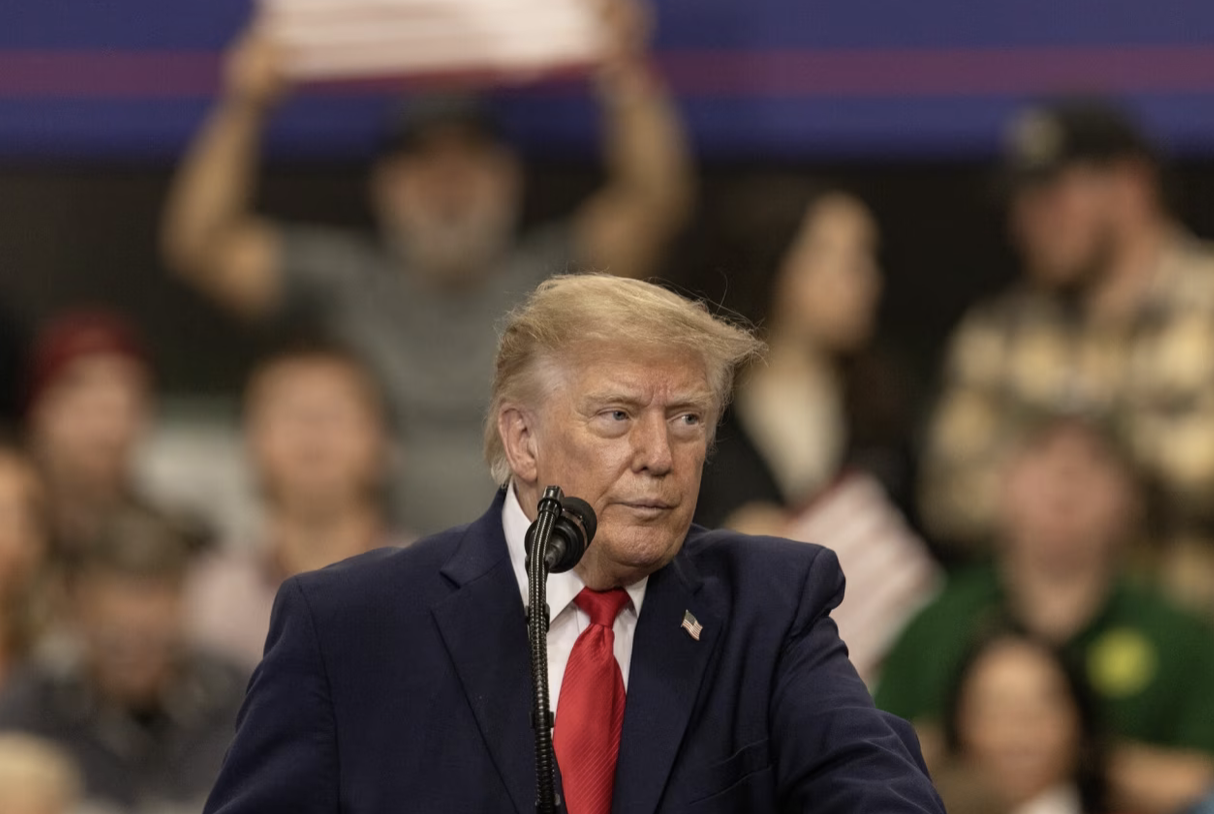
Something else should worry West Wing pooh-bahs. How much should Mr. Trump be on the road for the midterms? His presence campaigning can enthuse his true-blue supporters. But it also energizes the roughly 60% of the electorate who never liked or have soured on him. Suggestion: Let Mr. Trump raise money for candidates but don’t have him barnstorm, especially after Labor Day. Giant rallies will probably motivate the opposition more than his supporters. They’ll also guarantee more opportunities for the president to go off message. Better that he’s chief executive right now than campaigner-in-chief.
Probably the hardest thing Team Trump needs to do is let Republican candidates create distance from the president. Let them disagree with his $1 billion ballroom and $1.8 billion slush fund that critics are concerned could go to Jan. 6 felons. Then keep Mr. Trump from expressing his rage on Truth Social. Let candidates put forth their own ideas for lowering costs, cutting waste or reducing regulation, without waiting for presidential permission. In the 63 districts up for grabs, Republicans will have to win votes from people who aren’t Trump supporters.