Minimalist architect Ludwig Mies van der Rohe believed “less is more.” What’s true in aesthetics is true in politics sometimes, too. President Trump’s political handlers should keep that in mind this fall.
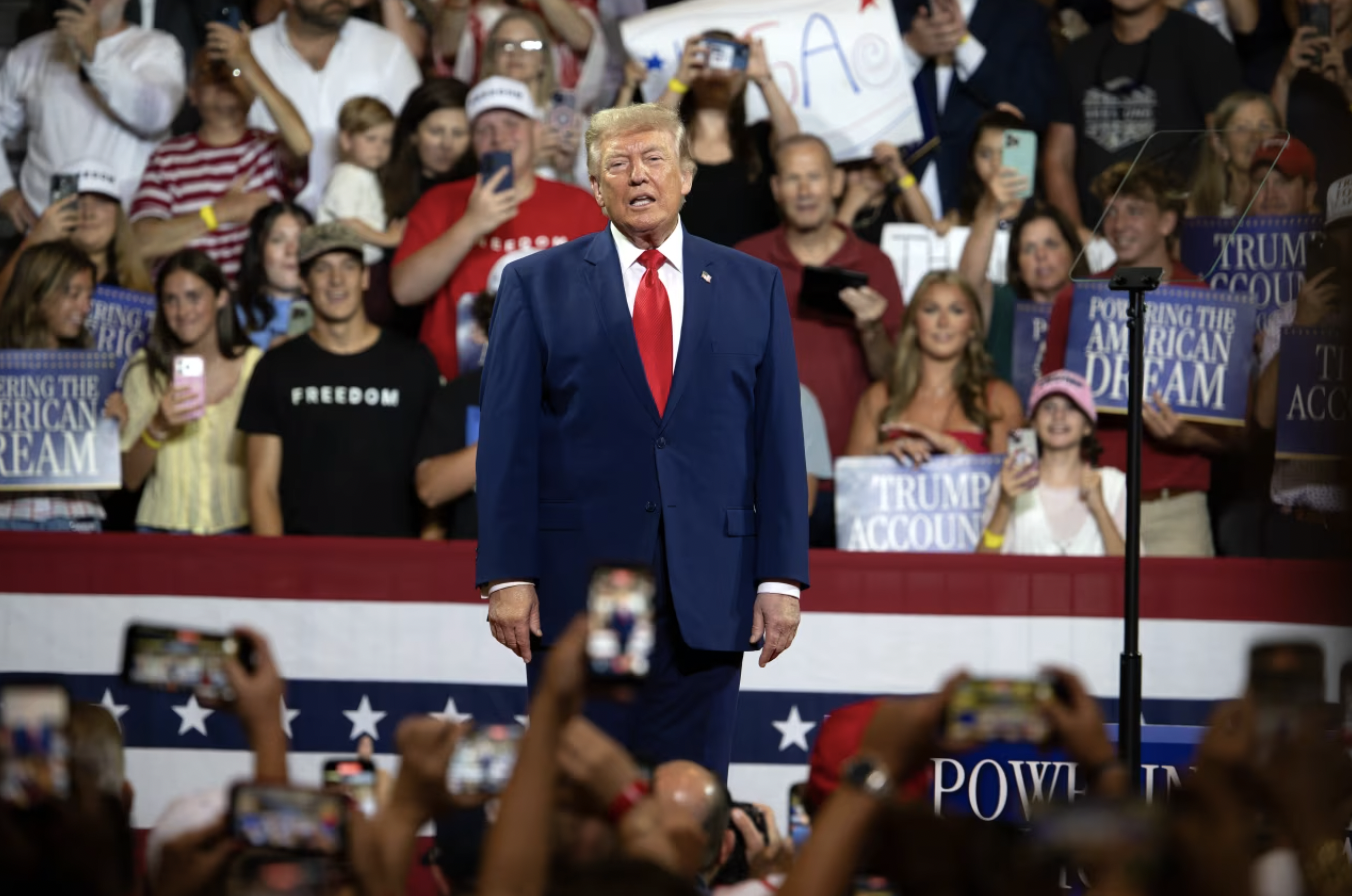
You can imagine how Mr. Trump wants this campaign season to roll out. He wants to fly from rally to rally, inserting himself in the middle of every important contest—he’s headed to South Carolina Friday presumably to do just that. In battleground states and districts, the president will walk on stage to Lee Greenwood’s “God Bless the U.S.A.,” then launch into an hour-plus of pontificating, warning of the dangers of the “Dumocrats,” and predicting “nothing but death, squalor, poverty” if these “communists” get elected. The crowds will go wild.
He’ll careen from one unrelated subject to another. He calls this “the weave.” The rest of us call it word salad. Each day, something he says—probably unscripted—will dominate that news cycle. It won’t matter how unconnected it is to the candidate he’s there to boost.
A far better course would be to minimize the president’s political profile after Labor Day. Mr. Trump is unpopular. His approval in the RealClearPolitics average is 39%. A season of political rallies won’t improve that. Less campaigning might.
It makes no sense to help Democrats more easily tie a Republican candidate to voters’ low opinion of Mr. Trump. Get the president to raise money at private fundraisers but avoid high-profile rallies in battlegrounds that will only energize an already excited Democratic electorate and make it more difficult for Republicans to contrast themselves with their opponents.
I know of what I speak. In 2006, President George W. Bush was unpopular: His Gallup approval rating on Nov. 1 was 38%, and the public had soured on the Iraq war. So while he raised oodles of campaign cash at private fundraisers, his campaigning was limited.
He went only where his presence would help. His first public fall campaign event was in deeply conservative southern Indiana on Oct. 28. He then appeared in South Carolina, Montana, Georgia, Nebraska, Kansas, Colorado and Florida before closing out with an election eve rally in Dallas. His messages were geared to big issues, the tone restrained. We weren’t looking to make news.
By lowering his profile and mostly avoiding the campaign trail, Mr. Bush gave Republicans a better chance to keep their fire focused on their Democratic opponents.
Still, as is customary in midterms, Republicans lost—30 House seats that year.
In Mr. Trump’s first midterm, in 2018, he campaigned extensively and the GOP lost 42 seats. He didn’t even have the albatross of an unpopular Middle East war weighing him down. Fewer campaign rallies and more presidential actions that make a meaningful difference in people’s lives could produce a better outcome this time.
One more 2006 lesson: While the Iraq war was unpopular, 51% in an August 2006 CNN poll still saw Mr. Bush as “a strong and decisive leader.” He defended his actions, patiently explained the stakes in the war on terror, and was consistent and steady. Some people who didn’t like the war still trusted him because they felt, as president, he might know more than they did.
By comparison, 62% of Americans characterized Mr. Trump as a “strong leader” in January 2025 prior to his inauguration. This July only 43% described him as strong.
The problem is messaging. Team Trump should stop the bluster and wild promises on the Iranian conflict, forgo crude insults of allies and even foes, and return to the war’s original rationale. As Mr. Trump has written on Truth Social: The “number one Goal is, and always will be, that Iran cannot have, in any way, shape, or form, a Nuclear Weapon.” Let him remind people the Iranian leadership has said for nearly a half-century “death to America” and with a nuclear arsenal, they could act on that threat. And for God’s sake, don’t TACO. That would only add to his image as weak, with consequences for domestic politics and the world.