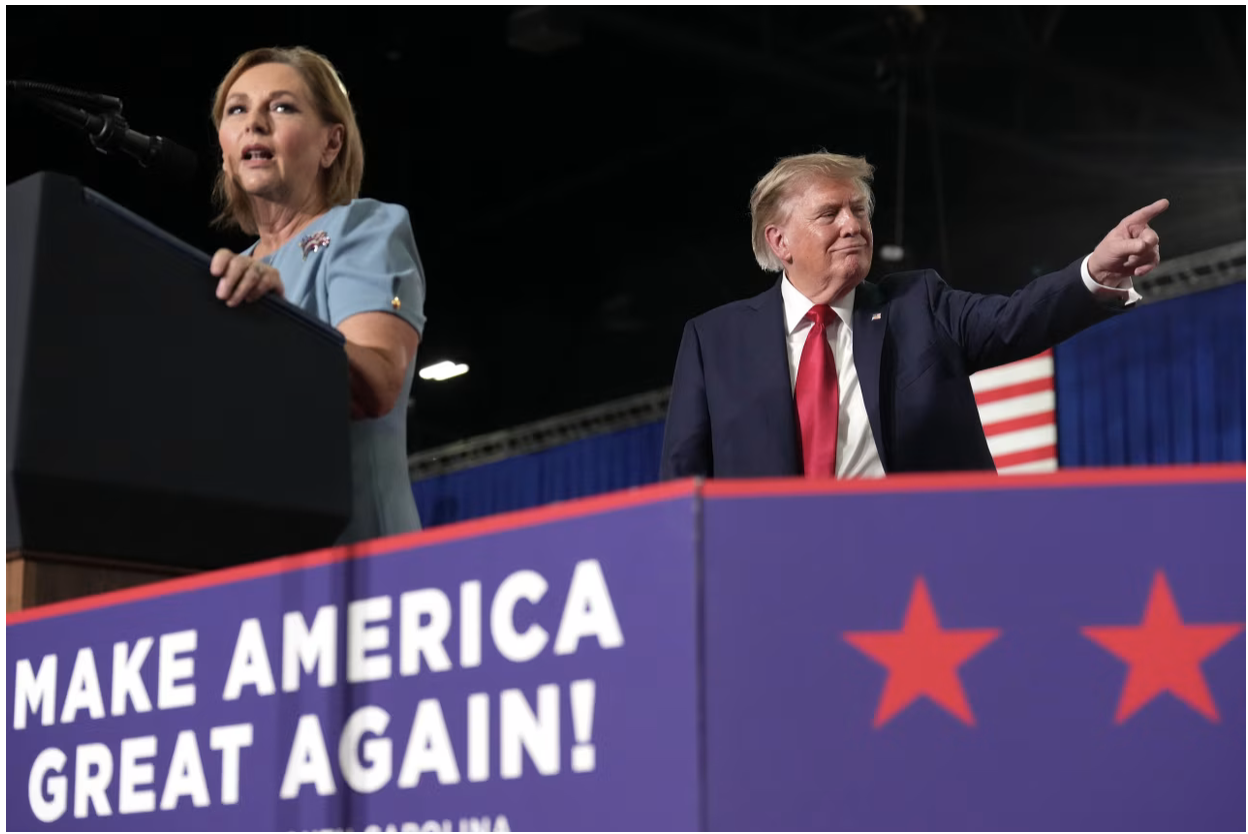
The presidential front-runners, Hillary Clinton and Donald Trump, won huge victories Tuesday. Yet their romps through the Acela primaries (named for the train that speeds through the Northeast region) cannot hide the disunion in their parties. Both Republicans and Democrats could suffer major defections this fall, either to the other party or to the sidelines.
Usually, few partisans break with their party’s presidential choice. Exit polls show that the share of Republicans who voted against their own nominee was 7% in 2012, 10% in 2008 and 7% in 2004. Slightly more Democrats voted against their nominee: 8% in 2012 and 11% in both 2008 and 2004.
Greater defections have occurred. In 1996, 19% of Republicans deserted their party’s nominee, Bob Dole, for President Bill Clinton or independent Ross Perot. In 1988, 17% of Democrats left their standard-bearer, Michael Dukakis, to vote for Vice President George H.W. Bush.
A third of Democrats voted for President Richard Nixon in 1972 after their party nominated George McGovern. A third of Democrats broke with their party again in 1980. Some voted for the independent candidate, Rep. John Anderson, but most pulled the lever for the Republican and became Reagan Democrats.
Tuesday’s exit polls show that both parties face the potential for significant defections this year, though the threat to GOP solidarity is greater.
Among Connecticut Republicans, 39% said they will not vote for Sen. Ted Cruz if he becomes the nominee; 25% said the same of both Mr. Trump and Gov. John Kasich. In Maryland 31% of Republicans will not vote for Mr. Cruz this fall; 25% said that of Mr. Trump and 24% of Mr. Kasich. Among Pennsylvania Republicans, the refusal rates were 35% for Mr. Cruz, 22% for Mr. Trump and 31% for Mr. Kasich. And Mr. Trump may have fared better than usual Tuesday, since the Northeast is his neighborhood.
Unity is a little better among Democrats. In Connecticut, 17% said they will not vote for Hillary Clinton if she is the nominee; 15% said the same of Sen. Bernie Sanders. In Maryland, 13% have ruled out Mrs. Clinton and 23% Mr. Sanders. In Pennsylvania the refusal rates were 15% for Mrs. Clinton and 19% for Mr. Sanders.
National surveys display a similar partisan disquietude. A poll last week by USA Today/Suffolk University asked voters what they will do if their preferred candidate is not nominated. Of Republicans, 7% said they’ll vote Democratic, 9% will “seriously consider” a third party, and 7% will stay home and not vote—a total of 23%. Among Democrats, 5% said they’ll vote Republican, 9% will consider a third party, and 7% will abstain—a total of 21%.
The impulse for unity will strengthen as the conventions approach, but both parties should be worried about cohesion this fall, especially given perceptions of their front-runners. In an April 15 poll by NBC/The Wall Street Journal, 56% of voters gave Hillary Clinton a negative rating (with 42% “very negative”), up from 51% in March. Donald Trump’s rating was 65% negative (53% “very negative”), virtually unchanged from last month.
To read more visit WSJ.com