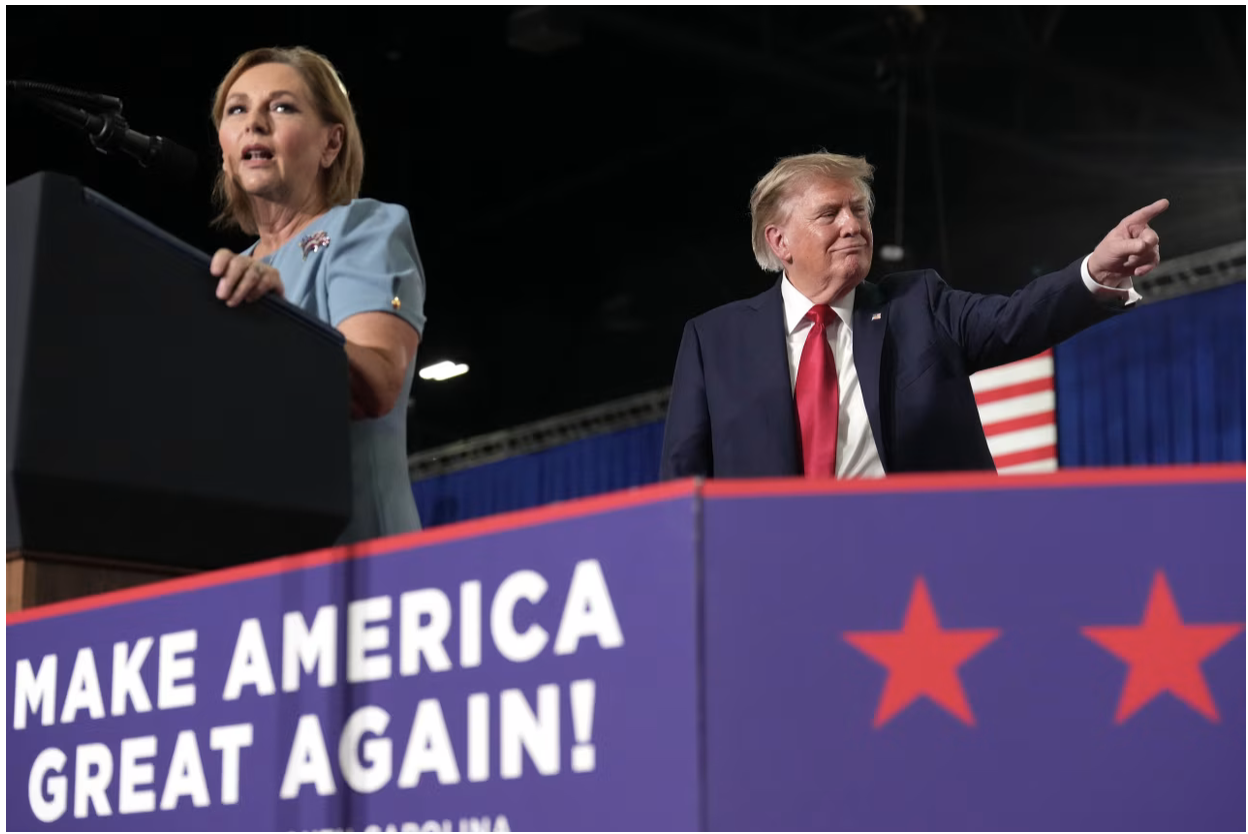
For someone leading others into an important political battle, Rep. Kevin Brady doesn’t cut an imposing figure. He’s more Omar Bradley than George Patton. But the soft-spoken, amiable former Ways and Means Committee chairman is an able commander of the House Republicans’ assault against the Biden tax plan.
The 66-year-old Texan distributed battle orders Tuesday at a House GOP Conference with seven pages of arguments for Republicans to use against the massive $2.1 trillion tax package passed out of committee last week by Ways and Means Chairman Richard Neal (D., Mass.).
Having long said he’d release the details as late as possible to minimize time for opposition to emerge, Mr. Neal knows he has concocted a plan that is dangerous to his party. Mr. Brady knows it’s also dangerous to America and offered material to House Republicans to make that case to voters.
Mr. Brady’s argument begins: Democrats want to give the U.S. one of the world’s highest corporate tax rates, higher than all our major economic competitors, including China. Cutting these rates in 2017 helped spur a strong pre-pandemic economy. Raising them now means we’ll “lose jobs to China, Russia, Europe and other countries,” Mr. Brady told reporters. “They’re going to clean our clock.”
The Texan also makes a convincing outline of how ordinary Americans—not billionaires—would pay most of the estimated $900 billion corporate tax hike through lower wages and benefits. The Congressional Joint Tax Committee backs him up, saying within 10 years, low- and moderate-income taxpayers will pay two-thirds of the corporate tax increase. Surprisingly, this view is shared by the left-wing Tax Policy Center, which says President Biden’s plan would raise taxes on 75% of middle-class families within a year and 95% over the decade.
Further, Mr. Brady reminded the House GOP Conference that small businesses are getting back on their feet just in time for Democrats to slap them down. The tax bill would be especially hard on the millions of small enterprises that are pass-throughs, filing on the personal tax schedule rather than the corporate one. They’d pay as much as 39.6% on profits and 25% on capital gains, while seeing their 20% small-business deduction severely limited. They’d also get slapped with a “net investment tax” of 3.8% and see death-tax exemptions for their family-owned businesses, ranches and farms slashed.
Another part of his argument: Low- and middle-income Americans would be socked with higher utility bills and gasoline prices by Democratic taxes on energy production, whose purpose is to raise the cost of energy from hydrocarbons. This would make buying from U.S. oil and gas producers costlier than purchasing energy from foreign countries which don’t have America’s exacting environmental standards.
House Democrats would also impose price controls on drugs, which Mr. Brady argues would reduce research and development of lifesaving pharmaceuticals. This proposal was too much for a few centrist Democrats, who blocked it in committee, though Speaker Nancy Pelosi vows to resuscitate it.
Mr. Brady also drew his Republican colleagues’ attention to the Democratic proposal to create of a huge universal paid medical and family leave entitlement. For companies that offer such programs today, taxpayers would pick up the tab for 90% of the cost while small businesses would have to start offering such benefits as well, whether they could afford the costs or not.
Besides family leave, Democrats would create a child-care “guarantee” and monthly child tax credit payments but drop requirements that recipients work or look for work, creating more dependency on government and gutting a major achievement of the bipartisan welfare reforms of the 1990s.
President Obama got into trouble for allowing his 2009 stimulus and the Affordable Care Act to be tainted by special-interest provisions. The Democratic tax plan is riddled with them. A household making up to $800,000 could get $8,000 for purchasing an electric vehicle—or $12,500 if it is made by union workers. Union dues would be deductible. There are $50,000 tax credits for hiring journalists, tax breaks for the country’s richest private university endowments, and a flood of tax credits for green energy projects of questionable value.
Mr. Brady gave his GOP colleagues plenty of ammo to attack the Democrats’ gigantic tax increase. Now it’s up to Republican members to set their sights on the vulnerable points and make a sustained push to convince swing voters. It will be a long fight, and this is only the opening skirmish: Next up is the massive spending blowout Democrats have planned for these revenues on. Republicans, game on!