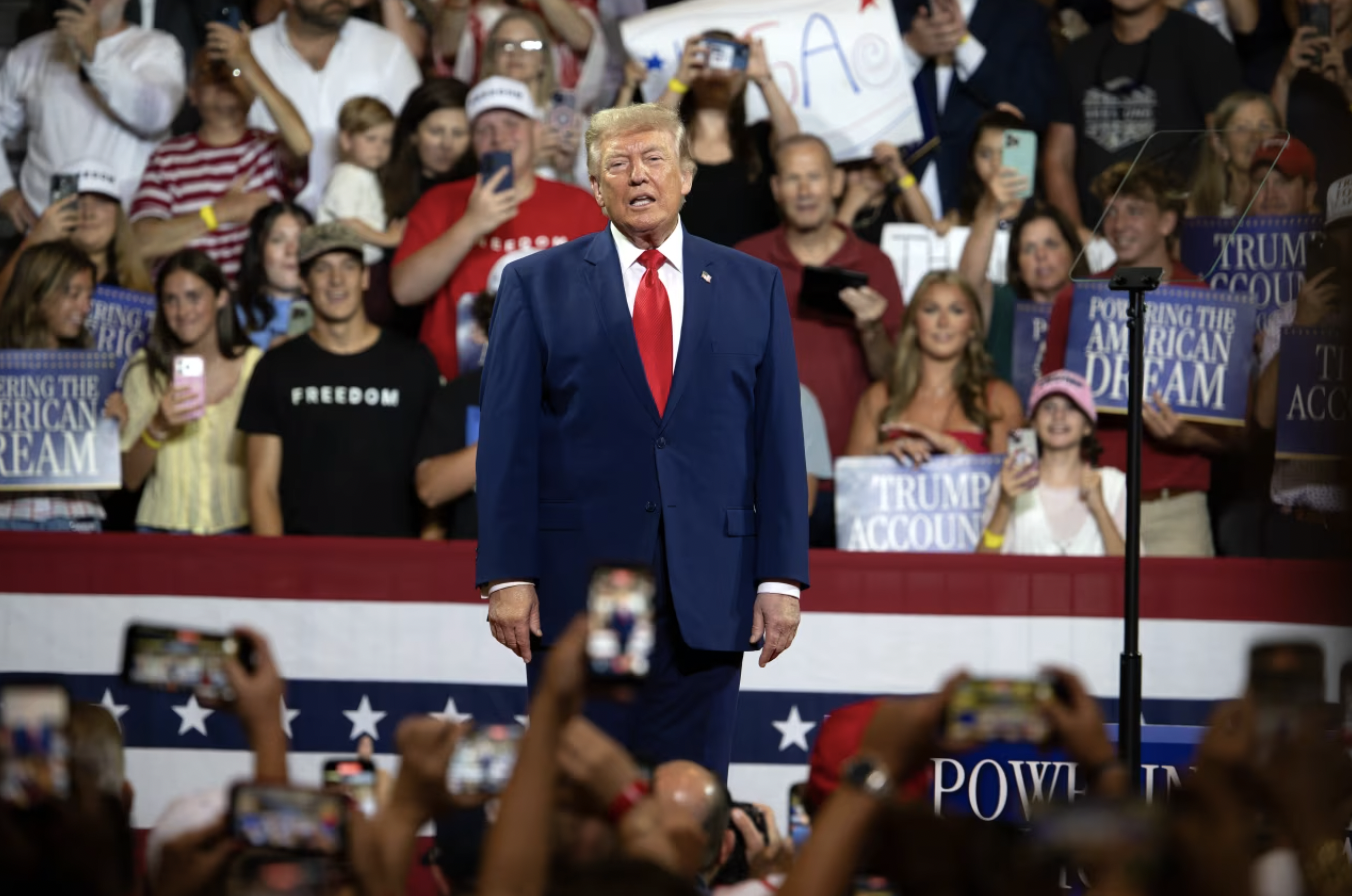
It is impossible to deny that the past six months have been rough for the Republican Party. The GOP Congress failed to fulfill its pledge to repeal and replace ObamaCare, and the president now has a lowly 38% job-approval rating, according to the Real Clear Politics average.
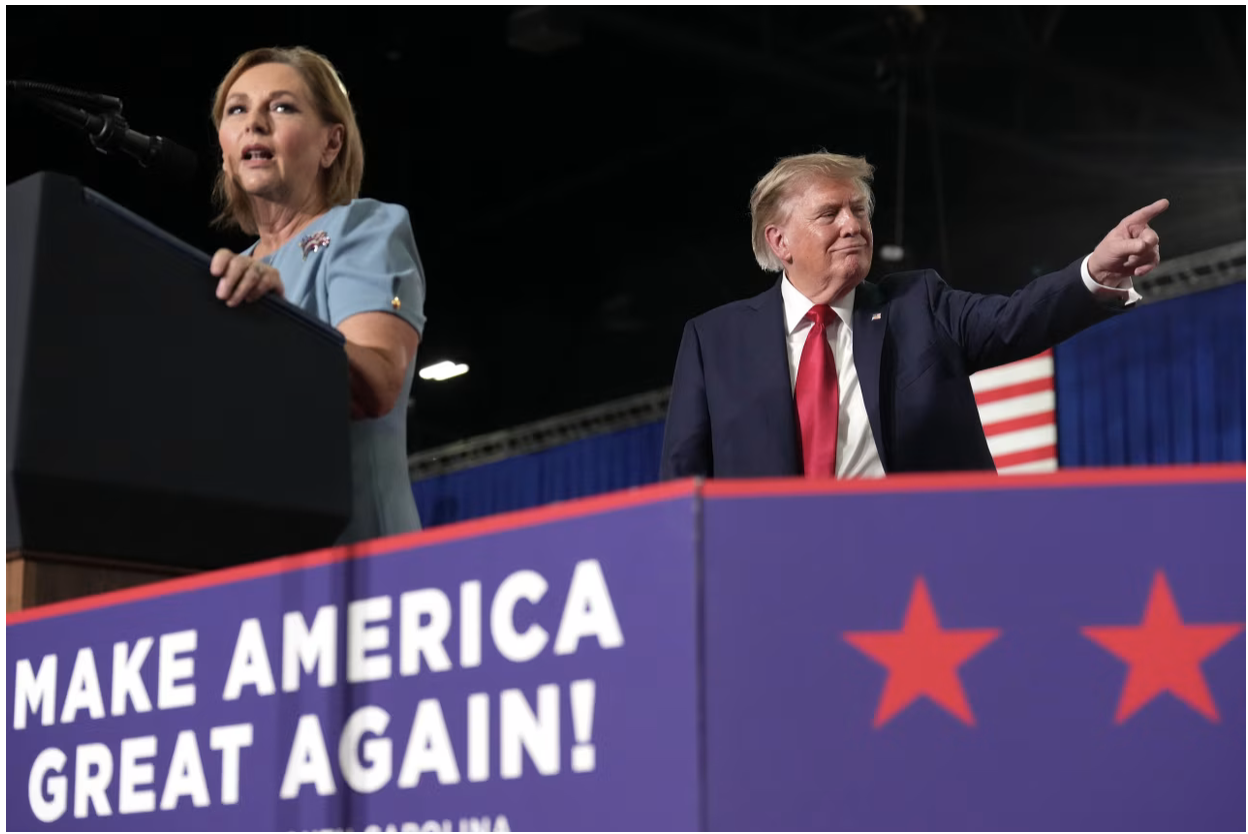
Yet none of this means these are bright days for Democrats. Last week one of their own, West Virginia Gov. Jim Justice, announced—while standing next to President Trump at a boisterous rally—that he was switching to the Republican Party. With the addition of Mr. Justice, the GOP now holds 34 governorships, tying the party’s nearly century-old record.
Mr. Trump’s 42-point margin of victory in the Mountain State contributed to Mr. Justice’s decision. The governor also laid blame, however, on Democratic state legislators, saying they had “walked away from me.” Democrats controlled the Legislature as recently as 2014, but Republicans now have majorities of nearly 2 to 1 in both the state House and Senate.
At first glance, one might assume the governor’s party switch was what caused Sen. Joe Manchin’s tirade on Sunday, when the West Virginia Democrat told the Charleston Gazette-Mail: “I just don’t give a s—. Don’t care if I get elected, don’t care if I get defeated.” But Mr. Manchin’s ire was actually directed at Democratic critics, who were irritated by his refusal to sign a letter on tax reform issued by his party’s leadership.
Mr. Manchin is not the only Democrat facing pressure from the Elizabeth Warren- Bernie Sanders hard left. In May, Sen. Heidi Heitkamp of North Dakota cast the deciding vote to preserve a costly Obama administration methane regulation that her state’s energy industry strongly opposed. She voted against North Dakota’s interests because she is up for re-election in 2018 and left-wing activists threatened to gin up a primary challenge or withhold their support in the general election.
Progressive intolerance was also evident last month after the chairman of the Democratic Congressional Campaign Committee, Rep. Ben Ray Luján, announced the committee would fund pro-life Democratic House candidates. “There is not a litmus test for Democratic candidates,” Mr. Luján said.
The Democratic Party’s pro-abortion faction exploded. Ilyse Hogue, president of Naral Pro-Choice America, tweeted that Mr. Lujan’s approach was “both an ethically and politically bankrupt strategy.” Destiny Lopez, a director of All Above All, called it “short-sighted and dangerous.” Former party chairman Howard Dean threatened not to support the DCCC’s efforts to elect a Democratic House majority.
Then there is Sen. Bernie Sanders, who is demanding Democrats endorse a single-payer health-care system. Our Revolution—an aptly named advocacy group spun off from Mr. Sanders’s presidential campaign—warns Democratic candidates to back single payer or lose the support of Sandernistas in Democratic primaries. The group showed its threats are real by endorsing a Democratic candidate in next year’s Nevada Senate primary over former Sen. Harry Reid’s favorite.
To continue reading this article, visit WSJ.com
This trend points to a broader problem for Democrats: their lack of a credible, unifying, positive message. Senate Minority Leader Chuck Schumer and House Minority Leader Nancy Pelosi attempted to offer one in late July under the label “A Better Deal.” It fell flat, with their slogan mocked as a rip-off of a Papa John’s Pizza commercial and their agenda dismissed as a rehash of traditional liberal initiatives that haven’t spurred much support.
That leaves Democrats with a platform that entirely consists of furious resistance to President Trump. Yet their message of obstructionism has been wholly ineffective so far. Democrats have failed to flip a single Republican congressional seat in this year’s special elections, even after their candidate in Georgia’s Sixth District—which Mr. Trump won by just over 1%—outspent his opponent $30.2 million to $6.6 million. In this year’s Virginia gubernatorial race, Republican Ed Gillespie has so far parried Democratic Lt. Gov. Ralph Northam’s attempts to make the contest all about Mr. Trump. The race is a dead heat in a state that has recently trended Democratic.
So while the press has focused on the difficulties of Mr. Trump’s first 200 days, the Democratic Party—out of power and far weaker than it has been in a century—faces its own set of life-threatening challenges. If Democrats were wise, they would stop obsessing about the president and instead focus on what their party must do to appeal to Middle America. But that’s not likely to happen, since out-of-touch ideologues and radicals have such an iron grip on the party.