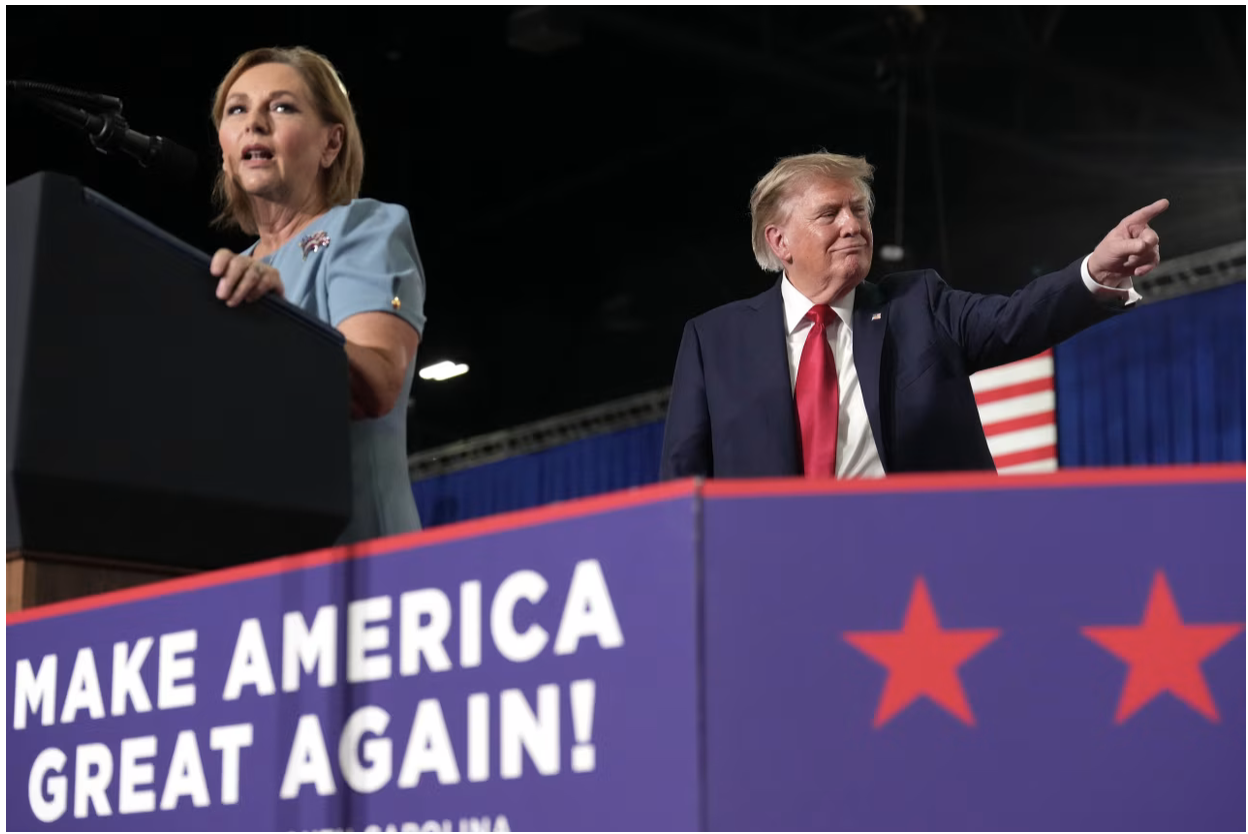
The 2024 presidential race is shaping up as the race few people really want. Neither the octogenarian Democratic incumbent nor the near-octogenarian Republican frontrunner is popular. The June 13 Economist/YouGov poll found that only 33% of voters want Donald Trump to run and 26% want President Biden to do so. Strong majorities—56% and 59%, respectively—would prefer they stay out.
This pattern persists across most polling. NBC’s April 18 poll found 70% of Americans believe Mr. Biden “should not run for president” and 60% think Mr. Trump shouldn’t. Thirty-eight percent have positive views of Mr. Biden, while 48% gave him a negative rating—38% very negative. Mr. Trump was at 34% positive, 53% negative—with 44% very negative.
There are lots of reasons Americans may dislike either frontrunner. Maybe they see Mr. Biden as too weak and too far left or Mr. Trump as too destructive and corrupt. But these polls may also reveal a desire for a generational shift. Americans may think we can do better for president than two men who’ll be a combined 160 years old by the time we vote next year.
We’ve seen this desire for younger faces before. In 1960, the president was Dwight Eisenhower. He commanded the D-Day invasion, led the Allies to victory in Europe in World War II, and was an admirable man and a successful president. But he was born in 1890 and nearing 70 as Americans were deciding on his successor.
That year, both parties picked young World War II veterans. Vice President Richard Nixon, 47, easily secured the GOP nod. Sen. John F. Kennedy, 43, bested three older Democrats—former Illinois Gov. Adlai Stevenson II (60), Sen. Stuart Symington (59) and Majority Leader Lyndon B. Johnson (52). In accepting the Democratic nomination, Kennedy called “for a new generation of leadership—new men to cope with new problems and new opportunities.” It was his winning campaign’s constant theme.
For the next 32 years, America’s presidents came from the Greatest Generation—Kennedy, then Johnson, Nixon, Jimmy Carter, Ronald Reagan and finally George H.W. Bush, who at 18 was for a time the Navy’s youngest fighter pilot in World War II.
Then came 1992, and Americans again turned to a younger generation, electing Arkansas Gov. Bill Clinton, born in 1946—the same year as George W. Bush and Donald Trump. Barack Obama, born in 1961, is a relatively young baby boomer, but with Joe Biden, Americans elected the first president from the pre-boomer Silent Generation, those born between 1928 and 1945.
There have been other periods of generational dominance of the White House. For 32 years from 1868 to 1900, there were seven Civil War generation presidents. Six served in the military, five in combat, while Grover Cleveland hired a substitute to replace him in the ranks. They were followed between 1900 and 1932 by six presidents born shortly before or after the Civil War. The next 28 years, until 1960, saw three presidents born at the Gilded Age’s peak (the 1880s and 1890s).
It may be time for another generational shift. It’s within the power of the people to bring about. Voters, not party bosses, will decide both party’s nominees.
The Republican contest already features leaders much younger than Mr. Trump. They include Florida Gov. Ron DeSantis (44), former South Carolina Gov. Nikki Haley (51), South Carolina Sen. Tim Scott (57), former New Jersey Gov. Chris Christie (60), former Vice President Mike Pence (64) and North Dakota Gov. Doug Burgum (66).
The 2024 presidential race is shaping up as the race few people really want. Neither the octogenarian Democratic incumbent nor the near-octogenarian Republican frontrunner is popular. The June 13 Economist/YouGov poll found that only 33% of voters want Donald Trump to run and 26% want President Biden to do so. Strong majorities—56% and 59%, respectively—would prefer they stay out.
This pattern persists across most polling. NBC’s April 18 poll found 70% of Americans believe Mr. Biden “should not run for president” and 60% think Mr. Trump shouldn’t. Thirty-eight percent have positive views of Mr. Biden, while 48% gave him a negative rating—38% very negative. Mr. Trump was at 34% positive, 53% negative—with 44% very negative.
There are lots of reasons Americans may dislike either frontrunner. Maybe they see Mr. Biden as too weak and too far left or Mr. Trump as too destructive and corrupt. But these polls may also reveal a desire for a generational shift. Americans may think we can do better for president than two men who’ll be a combined 160 years old by the time we vote next year.