Covid-19 has transformed so many things, from work and school to travel and simple human interactions. Politics hasn’t escaped alteration.
Take the national conventions. These sprawling political festivals draw delegates, party leaders, donors, activists and journalists, as well as the simply curious and advocates of important and sometimes bizarre causes. All are treated to a week of speeches, rallies, entertainment and business: approving a platform and nominating a presidential ticket.
No more. Because of the coronavirus, Democrats canceled their Milwaukee festivities, downsizing the in-person part to essential business and virtualizing everything else. Republicans moved from Charlotte, N.C., to Jacksonville, Fla., because North Carolina Gov. Roy Cooper wouldn’t allow the party to fill up a big arena for President Trump’s acceptance speech. Both conventions will be slimmed down, with important fundraising, networking and mobilization activities nixed or reduced to Zoom sessions or small, socially distanced interactions.
Convention planners are grappling with how to build enough interest and tension to draw a large television audience for the acceptance speeches, the crucial opportunity to lay down big themes and outline a vision. Ideally, more people will be watching than at any other time in the campaign except the debates. Almost 34 million people watched Hillary Clinton’s July 2016 acceptance speech, after nearly 35 million watched Mr. Trump’s earlier that month. This speech is especially important for the incumbent to show he has a worthy second act. It will tax each party’s creativity to draw the maximum number of eyeballs next month.
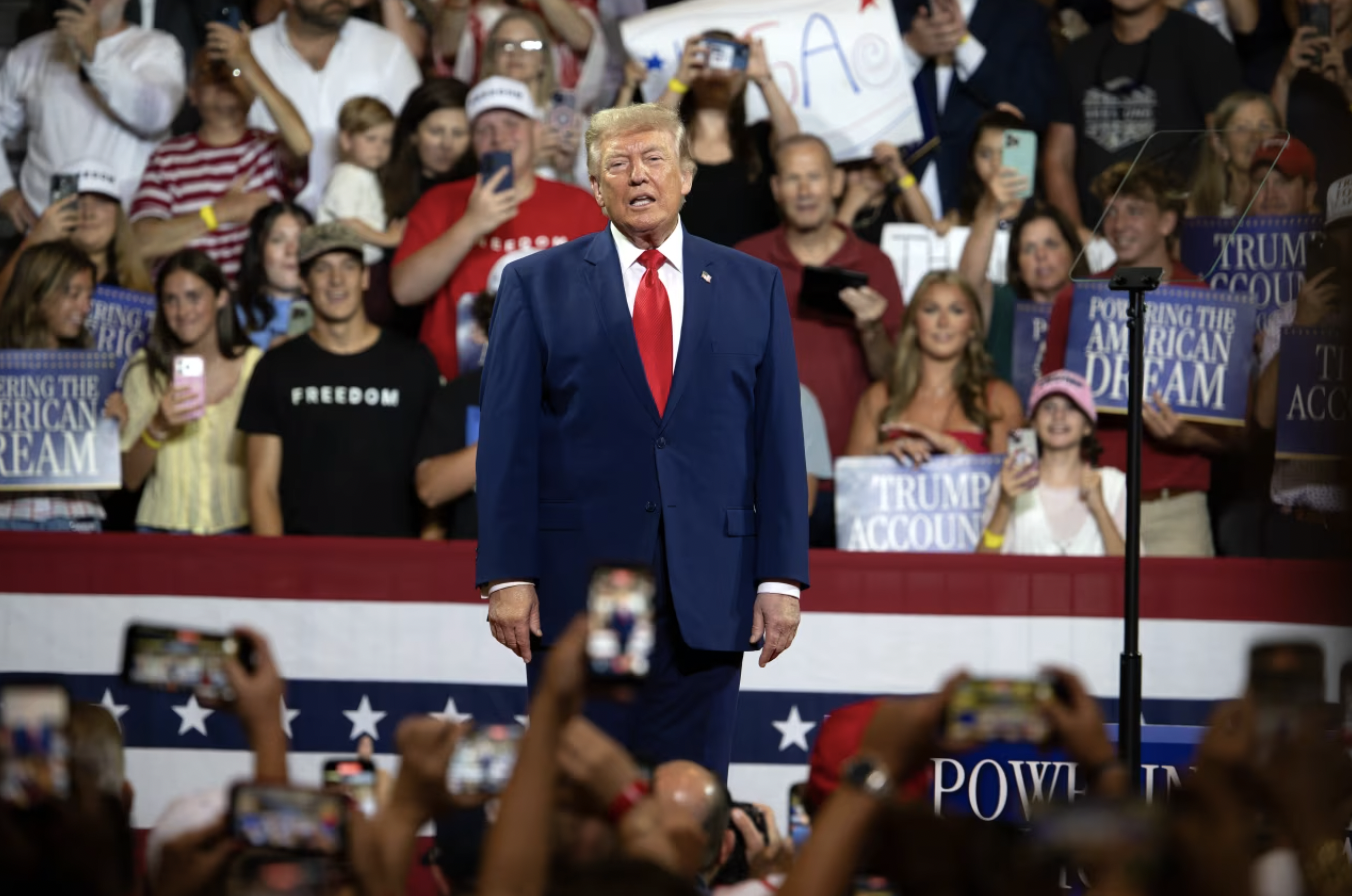
Unless Covid-19 retreats, the fall campaign will also be transformed. Gone will be big rallies, endless bus tours and days spent going from hangar to hangar as candidates hopscotch across battleground states. There will be more set-piece speeches like the one Mr. Biden delivered Tuesday to a nearly empty room, outlining his $2 trillion version of the Green New Deal. There will also be more releases of position papers, like Mr. Biden’s 110-page report last week of the issue groups he and Sen. Bernie Sanders organized.
Each campaign, if it’s wise, will plan its social media more carefully to set messages for the day, and deploy more surrogates to hit local television and newspapers. The latter reflects a return to a time before air travel, when a party’s message was amplified by local voices across the U.S.
There will be more pseudodramas like Mr. Biden’s running an ad in Texas. His campaign refuses to say how much it’s spending on the ad—a pittance, by all appearances—but reporters bit for the day on the story line that Mr. Biden is so strong he could win the Lone Star State, which Democrats last captured in 1976.
Unfortunately, this turn from conventional campaigning will also kill opportunities for journalists to confront candidates regularly on the trail with difficult questions. This Covid campaign format can also help the 77-year-old Mr. Biden avoid the usual wear and tear of running for president, while reducing the chances he’ll say something unscripted and crazy.
The new type of campaign can help Mr. Trump, but only with a change in mindset. He will miss big rallies, but he has the biggest megaphone of all with Air Force One and the presidency itself. He’s stronger politically when he eschews the role of candidate and acts as chief executive. He treats presidential events as campaign rallies when he should be transforming campaign rallies into presidential events.
The Covid campaign will also allow Mr. Trump to dodge questions from the press that inevitably would be about anything but the day’s message. It will also draw even more attention to his tweets, where his massive number of followers gives him a huge throw-weight advantage. The care with which he posts can advance his cause or harm it.
This all raises the stakes of the presidential debates of September and October. Debates haven’t been this important since the 1980 bout between President Jimmy Carter and Ronald Reagan, in which the Republican’s remarks—“There you go again” and “Are you better off than you were four years ago?”—settled the contest. Mr. Trump can’t take the debates for granted; the Washington Post reported that Mr. Biden “dominated” Paul Ryan in a 2012 debate. He was widely viewed as the victor over Sarah Palin in 2008’s slugfest, and he has already participated in a dozen debates this campaign, Mr. Trump none.
The pandemic is testing both candidates. America has never seen a campaign like this, in which the ability to adjust and recalibrate matter so much.