The Republican Party faces problems. The Democratic Party is a mess, too. In September 2018, before Democrats flipped 42 House seats, Gallup found that 44% of Americans approved of the Democratic Party while 52% disapproved. Today, the RealClearPolitics average says 36% approve of the Democratic Party while 56% disapprove. For Republicans, 39% approve and 54% disapprove, while President Trump’s numbers are 41% approve, 56% disapprove.
Why are Democrats less popular than Republicans and Mr. Trump? The answer was on display Saturday at the Global Progressive Mobilization conference in Barcelona.
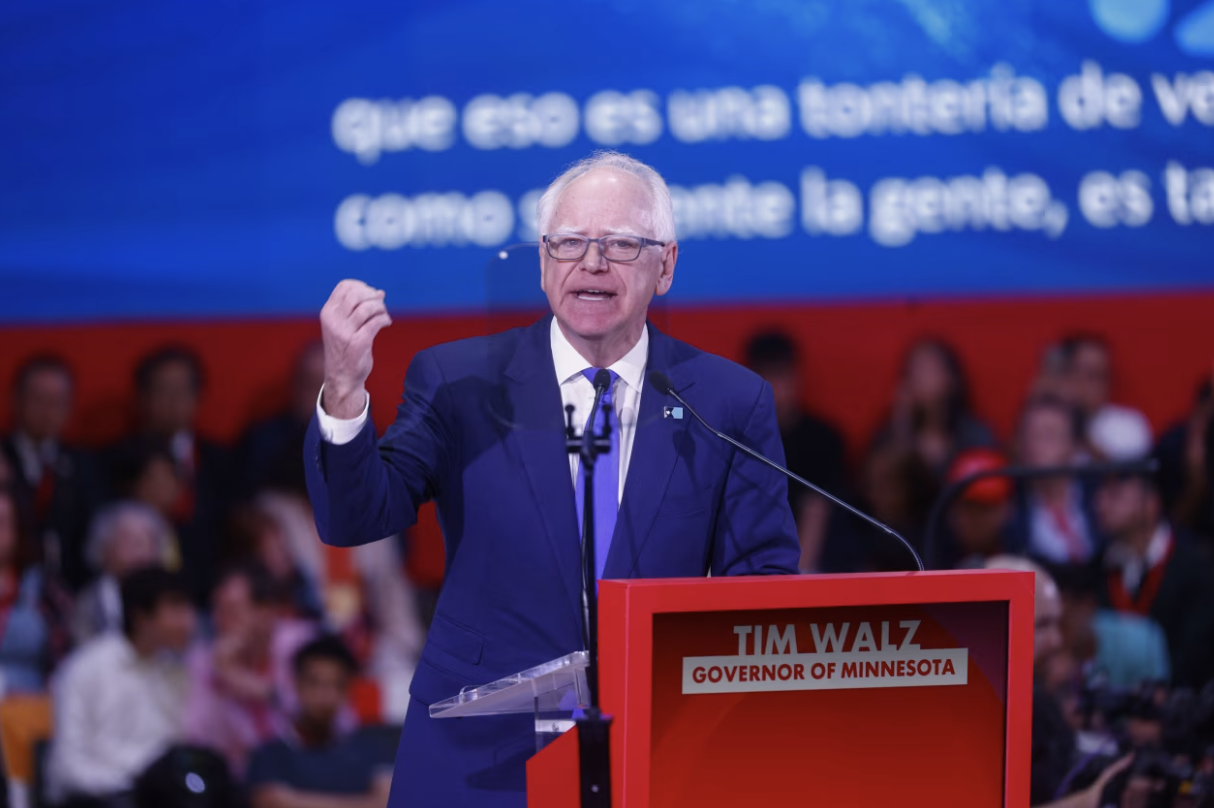
The confab of leftists from across the world featured speeches by Gov. Tim Walz (D., Minn.) and Sen. Chris Murphy (D., Conn.). American politicians used to feel restrained in criticizing the U.S. president even if he was from the other party. No longer.
Mr. Walz called Mr. Trump “feeble-minded” and “trigger-happy” and described the Iran war as “fascism.” Mr. Murphy called the president “the most significant threat to American democracy since the Civil War.”
Those remarks undoubtedly pleased the socialists and progressives at the conference. But they won’t add a vote to the Democratic column. The more the party’s messaging follows the Walz-Murphy line, the less attractive its candidates appear. Anyone who thinks Mr. Trump is a Nazi is already voting Democratic—or leaving the country. If that were a winning message, the party’s approval rating would be more than 36%.
Some Democratic leaders understand their party is unpopular, especially in right-leaning areas. So they’re trying different tactics. In four heavily Republican states, Democrats are running “independent” candidates for the U.S. Senate. If the independents win, they’ll caucus with the Democrats like Sens. Bernie Sanders of Vermont and Angus King of Maine have done.
In Nebraska, the state Democratic chairman, Jane Kleeb, is working to keep any Democratic candidate off the fall ballot, and some Republicans allege she is trying to stop the state’s Legal Marijuana NOW Party from running a candidate who would split the non-Republican vote. Her aim is to elect independent Dan Osborn, a leftie who came within 7 points of beating Republican Sen. Deb Fischer two years ago. He’d clearly caucus with Senate Democrats. His chances of winning are probably less than they were in the spring of 2024. Sen. Pete Ricketts won’t be caught off-guard.
Efforts by national Democrats to field independents in other states aren’t faring well. In Montana, Democratic donors are backing the independent candidacy of former University of Montana president Seth Bodnar, and Senate Minority Leader Chuck Schumer hasn’t publicly pushed back. According to reporting by Michael Scherer of The Atlantic, that has created a fiasco. Grassroots Democrats are up in arms, determined to run a real Democrat. That could divide the anti-Trump vote. Similarly, Idaho and South Dakota Democrats seem intent on fielding their own candidates while out-of-state big-wigs support left-leaning independents.
Still, while Mr. Schumer and others try mitigating their party’s toxicity by running independents in name only, smart Democrats understand their party needs a better message to attract voters.
They don’t have the complete answer, but three possible Democratic 2028 hopefuls have elements of a winning formula. Kentucky Gov. Andy Beshear has the tone. Democrats must focus “on things that matter.” “Talk like a normal human being,” he says. “Don’t just talk about your policy points. Talk about your ‘why’ ”—and “the why has to be authentic.” Of course in telling Democrats to be authentic, he should come across as such. That’s sometimes a problem for Mr. Beshear. He’s too wooden.
Sen. Cory Booker (D., N.J.) got the language right at last weekend’s Michigan Democratic Convention. He brought the crowd to their feet as he shouted, “Will you stand together, unified, strong—be the hope that people need?” He deliberately didn’t close with a Walz- or Murphy-like denunciation of Mr. Trump. He ended with a call for positive action.