The outcome of the midterms largely depends on the popularity of President Trump. His job approval in the RealClearPolitics average of recent polls is only 41.3%, with 56.3% disapproval. A president’s approval numbers this low generally precede a significant loss of House seats for his party.
But Mr. Trump’s popularity isn’t the only consequential number. The RCP average has the Democratic Party at 35.8% favorable to 55.7% unfavorable. The Republican Party does better, 39.3% to 53.9%. How did the Democrats become less popular than Mr. Trump? It took many years, much hard work, wacky policy stances and plenty of missteps.
Even the RCP’s generic House ballot is a problem for the Democratic Party’s midterm prospects. Although Democrats lead Republicans, 46.9% to 42.1%, that may point to only modest Democratic gains in the House. Only a handful of districts are up for grabs this fall. Prognosticators suggest there are 17 districts that are toss-ups. Thirteen are held by Republicans, four by Democrats. On top of these are 13 seats held by Democrats and two held by Republicans that lean blue and one Democratic and three Republican seats that lean red. Finally, there are two GOP seats and one held by an independent (former Republican Kevin Kiley) that are considered solidly Democratic after recent resdistricting shenanigans.
Altogether, that isn’t a lot of targets for Democrats. If they swept all 39 at-risk seats, that would translate into a gain of 21. That’s about half the 41-seat boost they saw in 2018, when their generic-ballot advantage before the election was 7.3 points.
Congressional Democrats aren’t doing much to advance their cause. Their “affordability” agenda is an amorphous afterthought. Many Democratic candidates act as if trashing Mr. Trump is all they need to do.
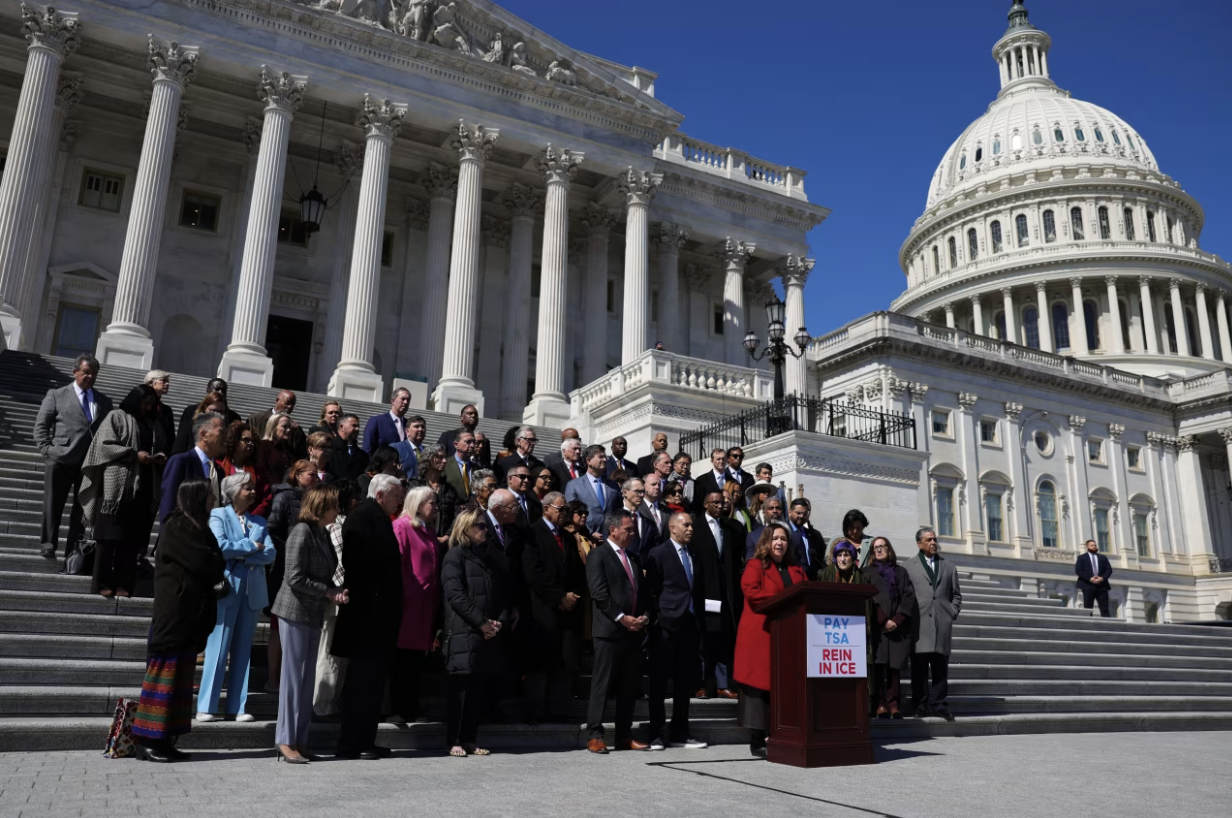
The public also increasingly blames Democrats for the federal government shutdown. Air travelers standing in line for hours to get through security might wish a pox on all politicians. But the Democratic insistence on no funding for Immigration and Customs Enforcement is playing to the base. It led a senior House Democrat, Virginia’s Don Beyer, to concede the tactic isn’t forcing any change and “in the meantime, we’re making people hurt.”
Democrats missed an off-ramp during Markwayne Mullin’s confirmation hearings for homeland security secretary. Democrats could have pressed him to negotiate in good faith on specific changes they wanted. This would have given Americans a better idea of the Democrats’ demands—the reason they have to wait in those interminable TSA lines. If Mr. Mullin refused to negotiate, Democrats could have voted against him and had a better argument to make to voters. If he did negotiate, they might have gotten much of what they wanted. Instead, they look intransigent.
To make things worse, leading Democrats keep saying foolish things in public. Gov. Gavin Newsom claimed California is a lower-tax state than Texas or Florida. Tell that to all the tax refugees leaving the Golden State.
Gov. Kathy Hochul, running in 2022, told New York Republicans to “just jump on a bus and head down to Florida where you belong, OK. Get outta town.” Last week, she said she is looking for people with a high net worth to “support the generous social programs” of New York. “Maybe the first step,” she suggested, “should be to go down to Palm Beach and see who you could bring back home.” Ms. Hochul may have discovered it was a mistake to raise taxes. But her answer isn’t to cut them and restrain spending. It’s to find what she calls “patriotic millionaires” who’d move back north. Good luck with that.