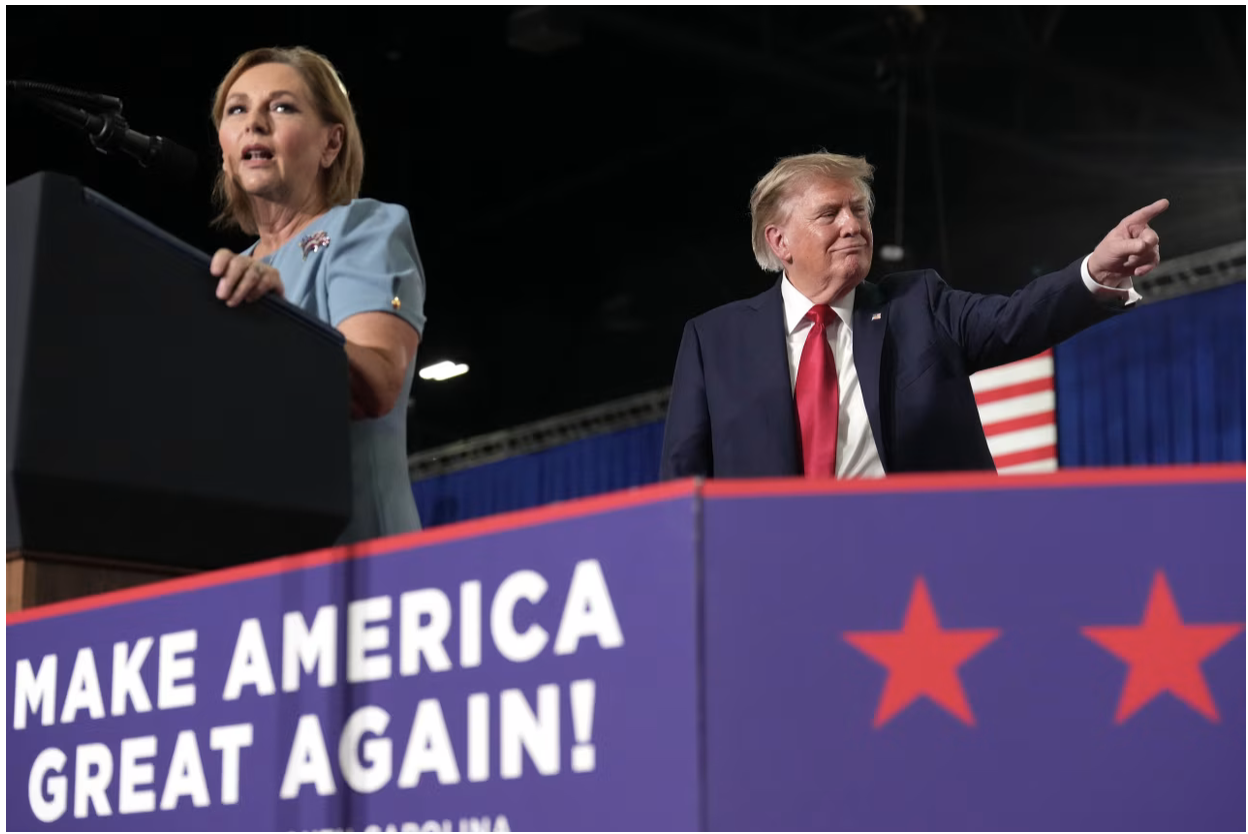
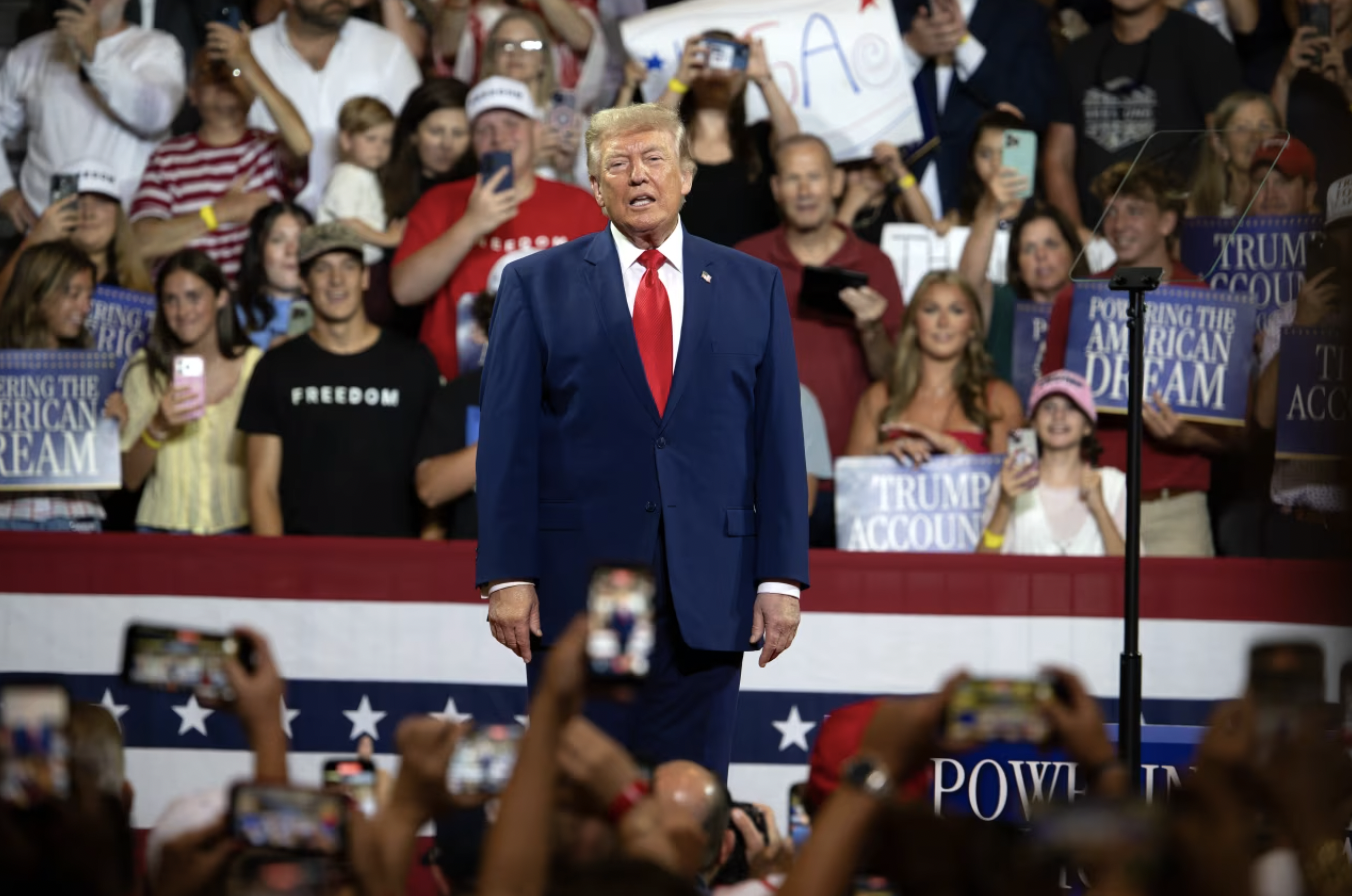
Donald Trump’s Conservative Political Action Conference speech in Orlando, Fla., Sunday started with a bang—“Do you miss me yet?”—causing the audience to explode in cheers. After a few pleasantries, Mr. Trump delivered big news: “I am not starting a new party.”
Mr. Trump then began a 40-minute assault on the Biden administration, emphasizing immigration. He followed with 15 minutes describing the Republican Party as a movement “that defends the social, economic and cultural interests and values of working American families of every race, color and creed.” He defined what he called “Trumpism” by itemizing successes in trade, deregulation, border security, law enforcement, gun rights, the economy and defense.
Yet even all this wasn’t enough for many CPAC attendees. For while 97% rated Mr. Trump favorably in a straw poll, only 68% wanted him to run for president again, and 55% said they supported his nomination in 2024.
Why the muted enthusiasm from a crowd of Mr. Trump’s most fervent fans? The explanation may be in what the ex-president said and didn’t say in his 15-minute definition of Trumpism. There was no forward-looking agenda, simply a recitation of his greatest hits. People like fresh material. Repetition is useful to a point, but it grows stale.
Mr. Trump also claimed his “endorsement is the most powerful asset in politics,” crowing that “because of my efforts . . . we had huge gains in the House, and I helped keep many senators in their seats.” This is somewhat true of November’s 10 most competitive U.S. Senate races. Successful Republican candidates ran ahead of Mr. Trump’s percentage and won in three contests—Alaska, Maine and Texas. Five who ran behind him still managed to win, in Iowa, Kansas, Kentucky, Montana and North Carolina.
In House races, however, the ex-president’s coattails were shorter: 181 of the 213 winning Republicans ran ahead of him, including eight in the 14 closest races that gave the GOP its pickups.
This pattern was reflected further down the ballot, where many state legislative candidates ran ahead of Mr. Trump. All 83 winning GOP candidates for the Texas House received a higher percentage than Mr. Trump in their districts.
These results reinforce that Mr. Trump’s drawing power is a double-edged sword. Yes, he received 11.2 million more votes in 2020 than in 2016—but also helped turn out 15.4 million more to oppose him, losing by 7.1 million.
Further, after urging Republican unity to beat Democrats in 2022, the former president then spent five minutes urging the defeat of 10 Republican representatives and seven Republican senators who voted to impeach or convict him. The effect was jarring.
Mr. Trump followed up with an extended rant, claiming “this election was rigged and the Supreme Court and other courts didn’t want to do anything about it.” Instead, they “used process and lack of standing” to avoid the controversy. That’s deeply misleading. Judges in all six contested states found the Trump lawyers didn’t produce sufficient evidence.
The Arizona Supreme Court said the Trump campaign didn’t present “any evidence of ‘misconduct,’ ‘illegal votes’ ” while federal courts in the state dismissed complaints as “largely based on anonymous witnesses, hearsay and irrelevant analysis.”
Georgia courts held the Trump claims “rest on speculation” and lack “facts or evidence.”
A Michigan judge characterized the claims “as hearsay” while a federal judge in the Wolverine State dismissed them as “nothing but speculation and conjecture.” A Nevada judge wrote that Mr. Trump’s lawyers “failed” to provide “credible and relevant evidence.”
The Third U.S. Circuit Court of Appeals upheld lower-court decisions in Pennsylvania that Team Trump didn’t provide “specific allegations and then proof.” In Wisconsin, a judge ruled that “on the merits of plaintiff’s claims,” Trump’s team “has not proved that defendants violated his rights.” The state Supreme Court concurred, saying his challenge was “meritless on its face.”
Perhaps the CPAC poll results are a manifestation of growing skepticism about Mr. Trump’s viability. Supporters want him to offer a forward-looking vision, but he won’t. Some view his declarations of civil war on Republicans as counterproductive and claims of political power hollow. And his repeated cries of stolen elections are causing some supporters to abandon politics altogether and others to doubt his claims.
Elements of Mr. Trump’s speech were fine. But true to form, the former president did it his way. The speech’s divisive, controversial and embittered parts dominated the coverage. He might be pleased by that, but shouldn’t be. Republicans shouldn’t be either.