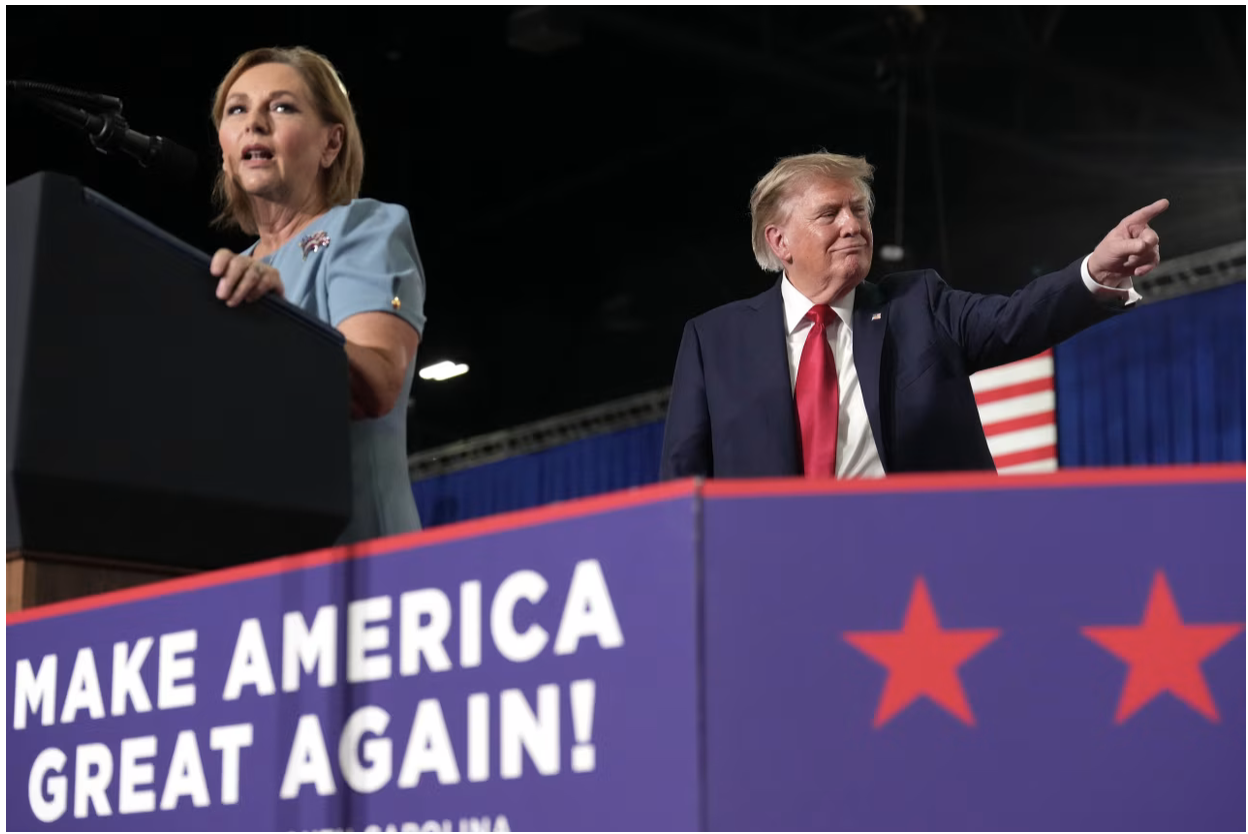
President Trump has a man crush on a predecessor. It isn’t Washington, Jefferson or Lincoln but William McKinley.
There’s much to admire in the 25th president, a decorated Civil War veteran, respected congressman and two-term Ohio governor. As president, he restored prosperity after a terrible depression, quickly won a war with Spain, and broke the Gilded Age’s political stalemate, ushering in a 36-year period of Republican domination.
But Mr. Trump is drawn to McKinley for one reason: tariffs. So much so that he gave him a shout-out in his inaugural address, saying the Ohioan “made our country very rich through tariffs.”
One problem: On tariffs, the president gets McKinley wrong in important ways. For starters, McKinley presided over Washington in a very different time. Federal spending in 1900—the year of his presidential re-election—was 3% of gross domestic product. Last year, federal outlays were 23% of GDP. It would be impossible to rely on tariffs on nearly $3.3 trillion in foreign imports to fund last year’s more than $6.8 trillion federal budget.
Tariffs in McKinley’s time had long been a budgetary staple. From 1863 to 1913, they brought in 49% of federal revenue, and much of the rest came from excise taxes on tobacco and liquor. In 2024, 48% of revenue came from personal income taxes, 36% from Social Security and Medicare taxes, and 10% from corporate taxes. Only 1.9% came from tariffs.
Mr. Trump also doesn’t grasp that McKinley’s tariff views shifted as our economy grew and changed. He told a Virginia audience in 1885, “I am a high protectionist.” That political boast was misleading. As House Ways and Means Committee chairman, he told business leaders pleading for higher tariffs not to tell him what they wanted but what they needed. He complained that in the tariff bills he authored as a congressman in 1890 and supported as president in 1897, he was forced to accept hundreds of Senate amendments that raised levies higher than he wanted. He had warned them that if tariffs were too high, “you diminish importations and to that extent diminish the revenue.”
Moreover, he saw the effect of industrialization and technological innovation on America’s economy. These raised production, increasing the importance of trade to the nation’s prosperity. The U.S. needed more markets.
The change in his thinking became apparent while he worked as Ways and Means chairman to pass a tariff bill in 1890. Divisions between high protectionists and Republicans who favored moderate tariffs made McKinley’s task difficult. Secretary of State James G. Blaine plunged into the debate. He urged Republicans to unite behind the principle of reciprocity: America would negotiate mutual reductions in tariffs with trading partners. This appeal worked somewhat. As the Senate loaded up McKinley’s bill with 496 amendments increasing tariff rates, the upper chamber accepted a watered-down reciprocity provision. Still, the law established the principle that the U.S. would treat countries as they treated us.
McKinley returned to reciprocity after his inauguration as president in March 1897. He called a special session of Congress that approved a moderate tariff measure that also gave him power to negotiate agreements with trading partners and to cut tariffs up to 20% in return for equal reductions on American exports.
The new president grabbed the chance to lower trade barriers. He appointed the first U.S. trade representative, who negotiated deals with Britain, France, Argentina and other trading partners. But the Senate—dominated by high protectionists—turned the treaties down.