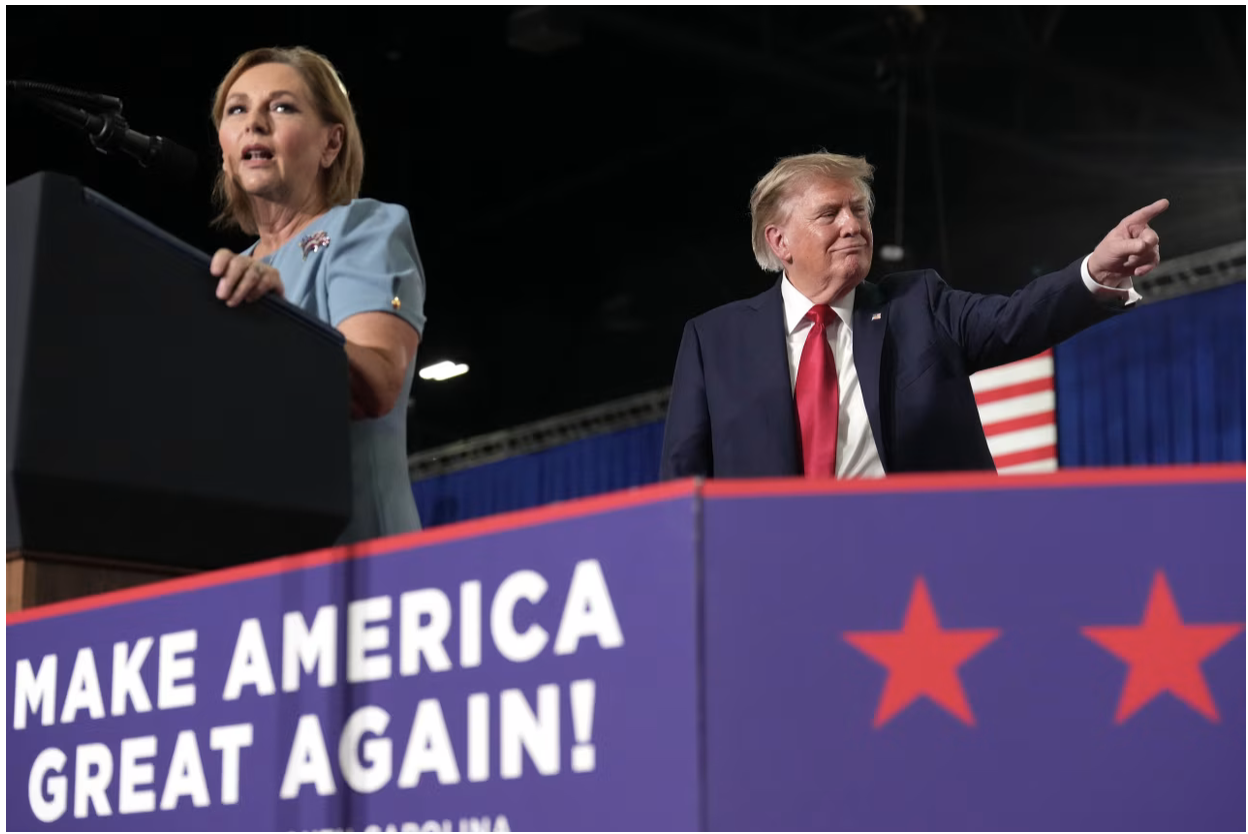
Donald Trump hates not being the center of attention. So on Tuesday he announced a third run for the presidency, even though Republicans rightly worry his announcement will change the Georgia Senate runoff from a referendum on President Biden to one on Mr. Trump. Fox News exit polls in Georgia showed Mr. Trump’s favorables were 44% and his unfavorables 54%, with 45% very unfavorable.
Even some of the former president’s supporters hoped he would stay off the stage at least until after the runoff. But seething from the defeat of so many of his endorsed candidates, and agitated that the spotlight was on other potential 2024 GOP contenders, Mr. Trump filed to run hours after one of his favorite candidates, Kari Lake, was declared the loser in the Arizona governor’s race.
Mr. Trump is the front-runner for the GOP nomination, but the first contests are 14 months away. Time is often unkind to early front-runners (see Rudy Giuliani, 2008). Anyone who has been defeated for the White House must show he has learned something from the experience to convince people who voted against him then to support him now. Richard Nixon did that in 1968, having lost to John Kennedy in 1960.
But Mr. Trump’s delivery was robotic and flat, his words too familiar. He read from a teleprompter, swiveling from side to side to look at the monitors. He recited, as if for the first time, his record on economic growth, border security, energy independence and national security before pivoting to the current administration’s shortcomings.
He sounded like a male version of Siri. There were only a few moments of emotion—praising Herschel Walker and celebrating Nancy Pelosi’s loss of the House majority. Then he wandered into ambling self-congratulations on trade, China and other accomplishments, while alluding to claims of a stolen election and declaring himself a “victim.” They were old, shopworn lines.
Beset by a civil trial that could crumble his financial empire, multiple criminal investigations, and Republicans unhappy over an unsatisfactory midterm who are looking for a new (and younger) leader, Mr. Trump reminded me of The Beatles’ 1965 hit: “Yesterday / All my troubles seemed so far away / Now it looks as though they’re here to stay / Oh, I believe in yesterday.”
Still, Tuesday’s address was better than Mr. Trump’s fall rallies. They had become stale rituals. Voters had been subjected to his rage, crude insults and wild claims about a stolen election for more than a year and a half. Repeating them ad nauseam at increasing volume didn’t impress many. True believers wanted fresh red meat, while swing voters wanted a forward-looking vision. Neither got what they wanted.
Mr. Trump’s critical weakness is that he doesn’t yet have a second act. His message Tuesday was essentially “Elect me and I’ll do what I did last time.” Unless he offers a fresh, convincing vision for the future, he risks losing the nomination or general election to someone who does.
Donald Trump hates not being the center of attention. So on Tuesday he announced a third run for the presidency, even though Republicans rightly worry his announcement will change the Georgia Senate runoff from a referendum on President Biden to one on Mr. Trump. Fox News exit polls in Georgia showed Mr. Trump’s favorables were 44% and his unfavorables 54%, with 45% very unfavorable.
Even some of the former president’s supporters hoped he would stay off the stage at least until after the runoff. But seething from the defeat of so many of his endorsed candidates, and agitated that the spotlight was on other potential 2024 GOP contenders, Mr. Trump filed to run hours after one of his favorite candidates, Kari Lake, was declared the loser in the Arizona governor’s race.
Mr. Trump is the front-runner for the GOP nomination, but the first contests are 14 months away. Time is often unkind to early front-runners (see Rudy Giuliani, 2008). Anyone who has been defeated for the White House must show he has learned something from the experience to convince people who voted against him then to support him now. Richard Nixon did that in 1968, having lost to John Kennedy in 1960.