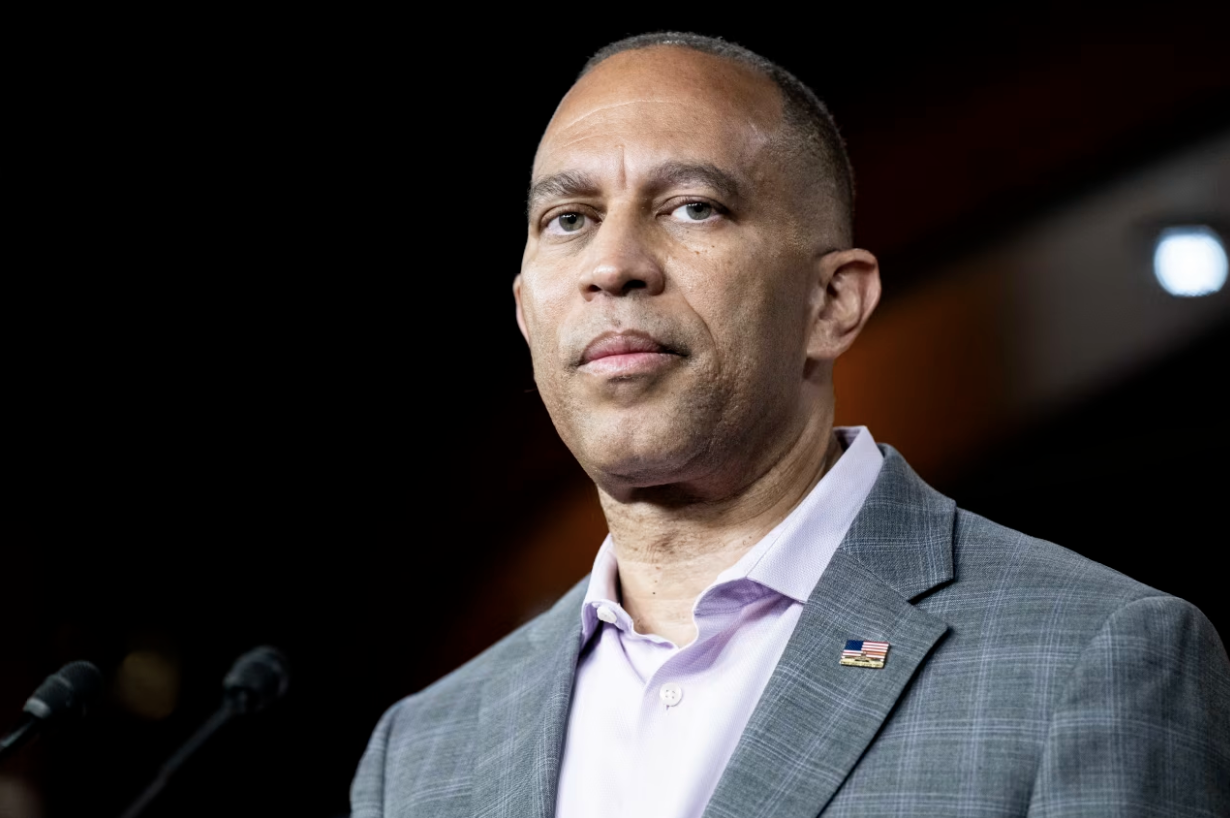
The closer we get to the midterm elections, the greater the impact of politicans’ words on swing voters. That’s why House Minority Leader Hakeem Jeffries’s comment on Sunday about impeachment was a mistake. Asked on “Meet The Press” about Rep. Alexandria Ocasio-Cortez’s claim that attacks on Iran have “driven our country past the threshold for impeachment,” he responded, “We haven’t ruled anything in or ruled anything out.”
Raising the specter of impeaching President Trump won’t win Democrats one vote. Everyone who wants Mr. Trump removed from office is already in the Democratic column. Making impeachment an election centerpiece could alienate swing voters sick of hyperpartisanship.
Voters want to hear how each party will make America, especially its economy, better. So Mr. Jeffries was right to pivot quickly, saying, “Our focus is going to be to make life more affordable for the American people.” But he didn’t offer a single concrete step Democrats would take on the economy before the moderator dragged him into discussing Graham Platner, his party’s Maine Senate nominee.
Democrats lack a sensible, easy-to-understand program to improve the economy. Without that, shows of sympathy for families struggling with high prices go only so far. Without substance, sympathy is thin gruel. And some high-profile policies Democrats are pushing—like wealth taxes in California and Washington state—don’t seem to be the answer.
Even if Democrats offer a credible economic package, the far-left language of some Democratic candidates will color the perceptions of up-for-grabs voters. Democrats run the risk of having their candidates everywhere forced to explain how they feel about far-left contenders like Mr. Platner, Senate nominee James Talarico in Texas and potential Senate nominee Abdul El-Sayed in Michigan.
Democrats will also be burdened by controversial House nominees. Adam Hamawy in New Jersey’s 12th Congressional District was a defense witness for the “Blind Sheikh,” Omar Abdel Rahman, in his trial over the 1993 attack on the World Trade Center. Chris Rabb of Pennsylvania’s Third District accuses Israel of “genocide.” Candidates like these are likely to make life miserable for more-moderate Democrats running in closely contested districts and states.
Democratic “influencers” like Hasan Piker also provide Republicans juicy targets. He’s been particularly active on the trail this year for Democrats. He’s said that “America deserved 9/11,” mocked Rep. Dan Crenshaw (R., Texas) for losing an eye in combat, and proclaimed he would “vote for Hamas over Israel every single time.” Good luck defending him in fly-over country.
But Republicans have problems, too—and theirs start at the top. Count on Democrats to replay endlessly Mr. Trump’s comments that “I love the inflation” and “I don’t think about Americans’ financial situation.”
Republicans also need fresh economic policies that resonate with swing voters. Tax relief and lower spending can be part of it. But there must be new proposals that convince voters their incomes will grow and prices will stop rising. Lower tariffs on food and consumer items America doesn’t produce would be a good place to start.
Moreover, the Iran settlement—whatever it is—must quickly lower gasoline prices. The reported 60-day extension of the cease-fire means oil could head back up in August, just before the Labor Day kickoff of the fall campaign, if Iran decides embarrassing Mr. Trump is more important than resolving the issue.
Then there’s the president’s narcissism. Renaming the Kennedy Center is example No. 1. There are too many others. Aides feel compelled to stroke Mr. Trump’s ego constantly. When a federal judge last week blocked the Interior Department from changing signs in national parks, the agency’s spokeswoman responded by saying “the greatest president in the history of our country” would preside over Sunday’s UFC matches at the White House. Greater than Washington, Jefferson and Lincoln?